You need a partner who delivers more than promises. A reliable automotive rubber parts manufacturer in China proves its worth through verifiable certifications, rigorous material control, and transparent production practices. You can evaluate these pillars directly. This assessment gives you a concrete checklist for vetting suppliers. You avoid vague assurances and secure a dependable source for Automotive Rubber Parts.
Verify IATF 16949 certification and raw material testing. This ensures the supplier follows strict quality systems and uses compounds that meet your specs.
Look for advanced manufacturing like LSR injection molding and statistical process control (Cpk ≥ 1.67). These cut defects and guarantee consistent part quality.
Choose a manufacturer that welcomes factory audits and provides English-speaking engineers. Open communication and reliable lead times build a strong partnership.
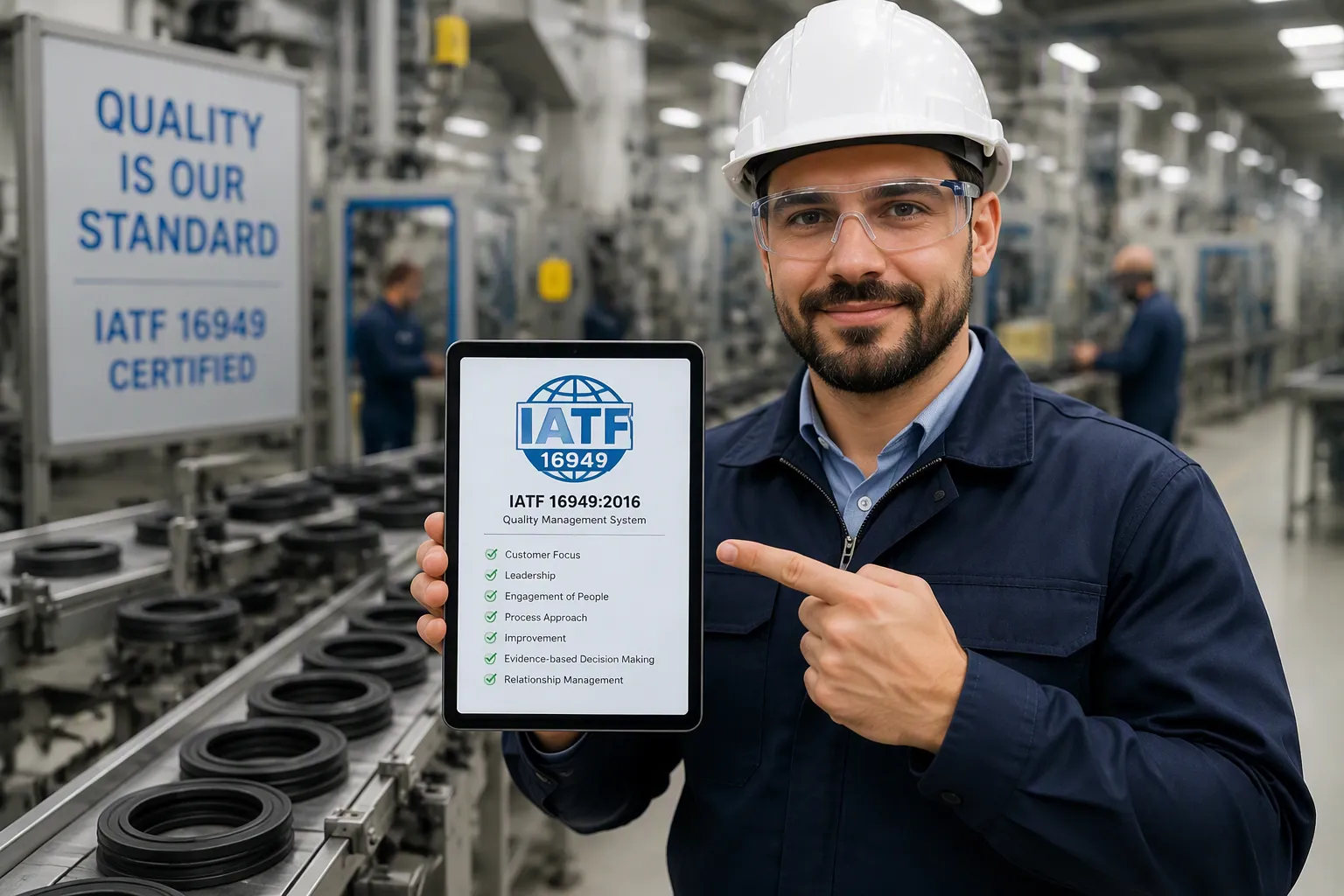
When you evaluate a potential supplier, the first filter is certification. IATF 16949 stands as the non-negotiable standard for any supplier serving the automotive supply chain. This certification builds on ISO 9001 but adds mandatory defect prevention tools that directly impact part quality and reliability.
|
Aspect |
ISO 9001 |
IATF 16949 |
|---|---|---|
|
Primary Focus |
Meeting customer requirements and enhancing satisfaction |
Building on ISO 9001, adds automotive-specific requirements for defect prevention, reduction of variation and waste |
|
Scope |
Applicable to any organization across all industries |
Specific to the automotive supply chain, extending to third-tier suppliers |
|
Defect Prevention Approach |
General continuous improvement framework |
Mandates specific tools and processes (e.g., FMEA, APQP, PPAP, control plans) to proactively prevent defects before they occur |
The difference matters. IATF 16949 gives suppliers structured systems for failure mode analysis, process control, and corrective action. Automotive customers demand these systems. The PPAP evidence package proves that a part meets specifications repeatedly before series production begins. This prevents defects rather than catching them after they occur.
Q: Can a small manufacturer be compliant without IATF 16949?
A: For non-automotive applications, ISO 9001 is often sufficient. However, if you supply automotive tier-1 or OEM, IATF 16949 is non-negotiable. Even without it, a manufacturer should still demonstrate robust process controls like FMEA and 100% inspection.
The certification process itself enforces discipline. A two-stage audit evaluates readiness first, then practical application. Annual surveillance audits verify ongoing compliance. Every three years, a full re-certification audit renews the certificate. This cycle ensures continuous improvement rather than one-time compliance.
The consequences of non-compliance are severe. Product failures from substandard materials can cause catastrophic vehicle failures endangering passengers. Recalls cost OEMs millions of dollars. Warranty claims, legal liabilities, and lost contracts follow. A single non-compliant part can halt a production line. These risks make certification verification essential when you choose an automotive rubber parts manufacturer China.
Certifications alone do not guarantee part performance. The raw materials inside the part determine its longevity. Top manufacturers conduct in-house testing for tensile strength, elongation, and compression set on materials like EPDM, NBR, and silicone. These tests validate that the compound meets specifications before it enters production.
Compression set testing measures the permanent deformation of silicone rubber after being compressed at elevated temperatures. This test is critical for parts such as gaskets and O-rings because it determines the material's ability to maintain sealing force over time. A low compression set indicates that the silicone will continue to push back against mating surfaces, preventing leaks and ensuring long-term reliability. Without such testing, a seal that initially passes may fail after a year due to loss of compression.
Chinese manufacturers with decades of experience often build extensive material databases. These databases track performance data across thousands of formulations. When you request a custom compound, a reliable rubber factory can reference similar applications and predict outcomes with confidence. This reduces development time and risk.
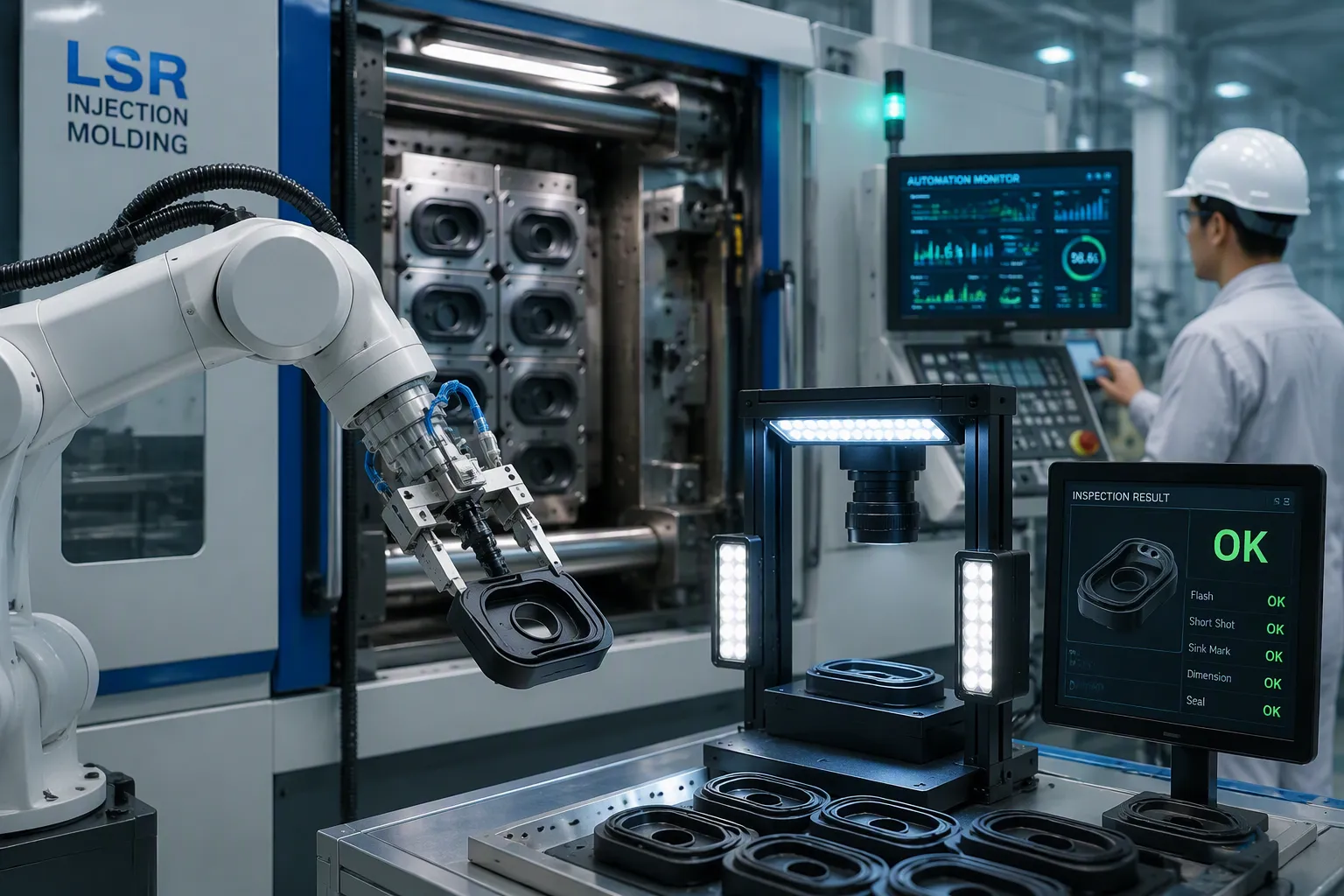
Certifications and material control establish a foundation. Production technology determines whether a manufacturer can deliver consistent quality at scale. You should evaluate the equipment and processes a factory deploys before committing to a partnership.
Liquid silicone rubber (LSR) injection molding separates top-tier facilities from conventional shops. This process delivers exceptional precision and repeatability. Compression molding still serves large parts like engine seals, but it cannot match the tight tolerances of injection molding. The table below compares these methods directly.
|
Process Attribute |
LSR Injection Molding |
Compression Molding |
|---|---|---|
|
Automation |
High |
Low to Medium |
|
Precision |
Very High |
Medium |
|
Cycle Time |
Fast |
Slow |
|
Part Complexity |
High |
Medium |
|
Volume Suitability |
High |
Low to Medium |
A reliable OEM rubber supplier China invests heavily in automated systems. These systems eliminate the variability that human operators introduce. Consider the impact across three critical areas:
Material handling: Robotic arms with precision grippers move components faster and more consistently than manual operations.
Mold filling: Robots equipped with high-precision dispensers ensure accurate, consistent cavity filling, which directly improves end-product quality.
Post-production inspection: Machine vision systems detect minute defects that human eyes routinely miss.
Multi-cavity molds amplify these advantages. One press cycle produces multiple parts simultaneously. This approach shortens lead times, reduces material waste, and minimizes flash. High-volume production of Automotive Rubber Parts demands exactly this capability.
Automated process control extends beyond robotics. Modern factories deploy systems that monitor production in real time.
|
Automation Mechanism |
How It Reduces Human Error |
Resulting Benefit |
|---|---|---|
|
Automated dosing systems |
Replaces manual measurement, eliminating weighing mistakes |
Accurate raw material proportions, consistent batch formulation |
|
Automated mixing controls |
Removes operator judgment for time and temperature |
Uniform additive dispersion, reduced batch variation |
|
Real-time in-process monitoring |
Detects deviations automatically without waiting for human inspection |
Early issue identification, lower rejection rates |
Industrial automation and controls are specifically designed to eliminate or significantly reduce human error by managing and monitoring manufacturing processes in real-time, which also reduces exposure to hazardous conditions and leads to safer, more reliable operations.
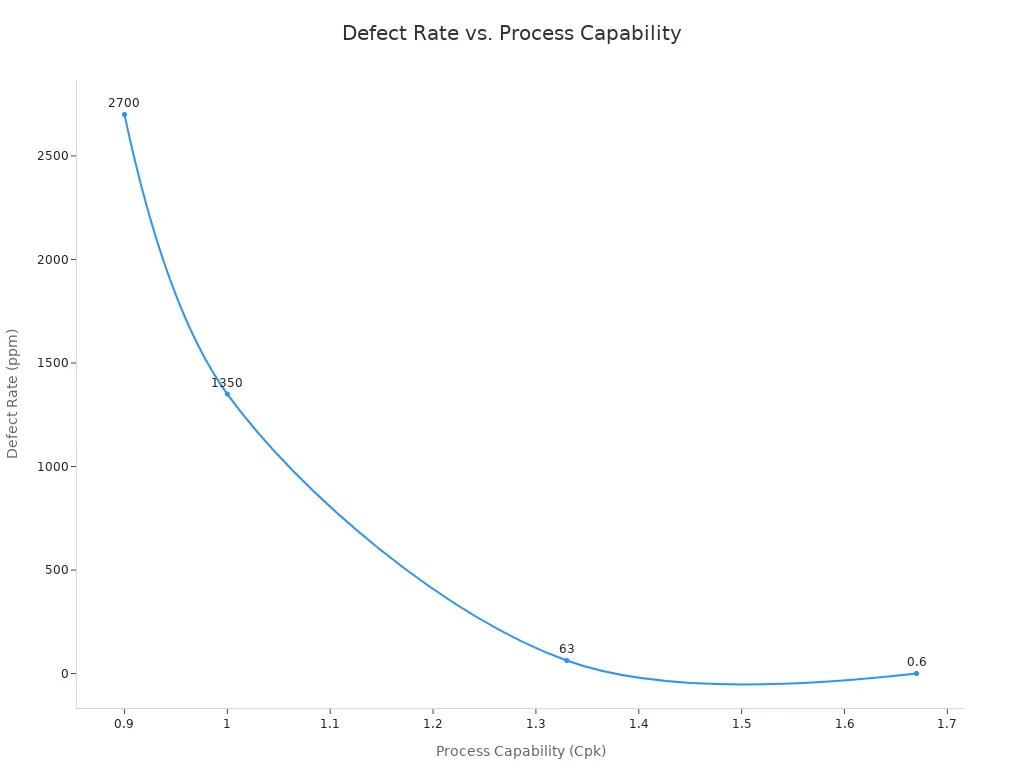
Statistical process control (SPC) provides the data backbone for quality assurance. A capable custom rubber components manufacturer monitors process capability using Cpk values.
|
Process Capability (Cpk) |
Defect Rate (ppm) |
Status |
|---|---|---|
|
0.9 |
2,700 |
Below standard |
|
1.0 |
1,350 |
Marginal |
|
1.33 |
63 |
Industry capable |
|
1.67 |
0.6 |
Automotive target |
Moving from Cpk 1.0 to 1.67 cuts defect rates roughly 4,500-fold. Automotive customers demand Cpk ≥ 1.67. SPC catches process drift before defects exist, unlike inspection which only checks finished parts.
Technology matters little without transparent communication. FUSTE exemplifies the communication standards you should expect from a partner. They employ English-speaking engineers who understand both technical specifications and cultural nuances. These engineers provide customized solutions rather than forcing standard products into your application.
FUSTE also welcomes factory audits. This willingness demonstrates confidence in their operations. You can verify their claims firsthand, inspect their equipment, and observe their quality systems in action. Such transparency builds the trust necessary for long-term partnerships.
Lead times reveal operational efficiency. FUSTE operates with 10 continuous working hours per day, six days per week to guarantee delivery schedules.
|
Production Stage |
Lead Time |
|---|---|
|
Samples |
12–15 days |
|
Mass Production |
7–12 days |
These timelines reflect disciplined scheduling and reliable supply chains. When you evaluate manufacturers, request their standard lead times and compare them against these benchmarks. A supplier who cannot commit to specific delivery dates will struggle to support your production planning.
The combination of advanced manufacturing, statistical quality control, and transparent communication creates a dependable partner. You need all three elements working together. A factory with excellent equipment but poor communication will frustrate your team. A communicative supplier without modern machinery cannot deliver precision parts. Seek the complete package.
A reliable manufacturer holds IATF 16949 certification, masters raw material quality, and invests in advanced production technology. Transparent communication completes the picture. You can verify these criteria firsthand. Request a sample batch or factory audit from FUSTE. This practical step confirms their capability before you commit to producing Automotive Rubber Parts at scale.
You can request a copy of the certificate and cross-reference it with the IATF database. A custom rubber components manufacturer willingly shares audit reports. Conduct your own on-site inspection.
A reliable rubber factory delivers samples within 12–15 days. Mass production follows in 7–12 days after approval. Compare these benchmarks against any OEM rubber supplier China timeline.
Leading suppliers employ English-speaking engineers who manage technical discussions directly. This eliminates translation errors and accelerates problem resolution. Confirm this capability when evaluating any automotive rubber parts manufacturer China.12




 online service


