Automotive rubber sealing solutions play an essential role in protecting vehicle components from water, dust, moisture, and external contaminants. From electrical wiring connections and engine compartments to chassis components and automotive lighting systems, properly designed rubber seals help maintain component reliability, prevent unwanted ingress, and support long-term vehicle performance.
For automotive manufacturers and component suppliers, choosing the right sealing material and structure is just as important as achieving a precise fit. EPDM, silicone, NBR, and FKM rubber materials offer different performance characteristics depending on operating temperature, environmental exposure, and contact media.
Xiamen Fuste Rubber & Plastic Co., Ltd. specializes in custom molded rubber components and extruded rubber products for automotive applications. With experience in material formulation, mold design, and manufacturing, Fuste provides customized rubber sealing solutions for automotive electrical, engine, chassis, cooling, and other vehicle systems.
Vehicles operate in environments where components are constantly exposed to rainwater, road spray, dust, mud, temperature changes, and mechanical vibration. Without suitable sealing structures, these external factors may affect electrical connections, accelerate component wear, and increase maintenance requirements.
Automotive rubber sealing components create a flexible barrier between exposed areas and sensitive internal parts. Their primary functions include:
For example, a rubber grommet installed where an automotive wiring harness passes through a metal panel helps seal the opening while protecting the cable from sharp edges. Similarly, rubber gaskets installed between two mating surfaces help prevent water or other substances from entering the connection area.
Different vehicle systems require different rubber sealing structures. The component design depends on its installation position, sealing direction, movement requirements, and environmental exposure.
Automotive rubber grommets are commonly installed at cable entry points, firewall openings, vehicle doors, and body panels. They protect wiring harnesses from abrasion while helping prevent water and dust from passing through panel openings.
EPDM rubber is frequently used for these applications because of its resistance to weathering, ozone, and moisture. For moving connections, flexible rubber bellows can accommodate repeated bending and stretching during vehicle operation.
Fuste supplies customized automotive rubber bellows and EPDM door boot grommets designed for vehicle wiring protection and sealing applications.
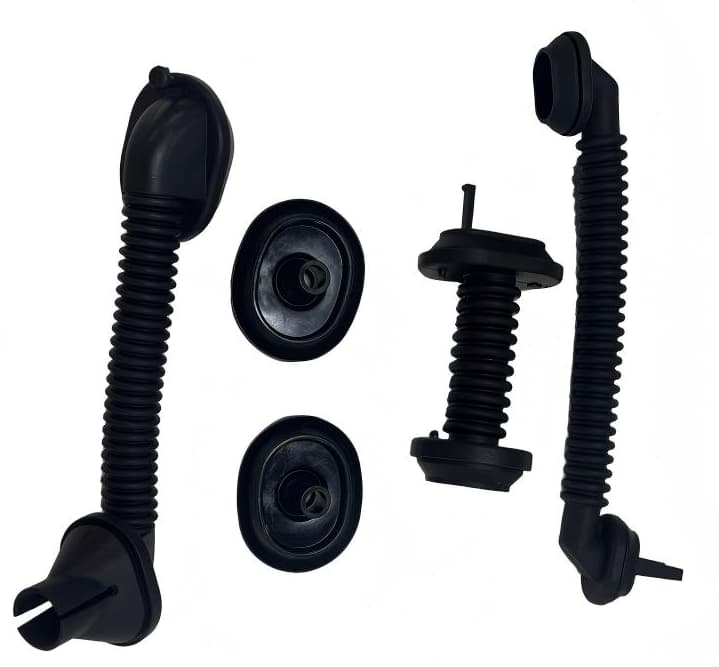
Rubber gaskets are used between two connected surfaces to create a sealing interface. They are commonly found in automotive engine assemblies, lighting housings, electrical enclosures, and other component connections.
The gasket's shape, thickness, hardness, and compression characteristics influence its sealing performance. A properly designed gasket should maintain sufficient contact pressure without excessive deformation or compression set.
For applications requiring moisture protection, custom rubber gasket seals can be developed according to the required geometry, material, and installation conditions.
Rubber dust covers provide protective barriers for exposed mechanical components, including parts of automotive engine, brake, and chassis systems. Their flexible structure helps keep dust, dirt, moisture, and other contaminants away from sensitive areas.
Depending on the application, dust covers may require resistance to repeated movement, abrasion, temperature changes, and exposure to automotive fluids. Material selection should therefore be based on the actual operating environment rather than waterproof performance alone.
Extruded rubber products are suitable for applications requiring continuous sealing profiles or customized cross-sectional shapes. They can be designed for specific installation channels, connection interfaces, and dimensional requirements.
Depending on the vehicle application, manufacturers may select different rubber compounds and profile structures to achieve the required flexibility, compression, and environmental resistance.
Material selection is one of the most important factors in automotive rubber sealing design. Different elastomers have different resistance characteristics, and no single rubber material is suitable for every automotive application.
The following table summarizes commonly used automotive rubber materials and their general characteristics.
| Rubber Material | Main Characteristics | Typical Applications |
|---|---|---|
| EPDM | Good weather, ozone, and water resistance | Door seals, wiring grommets, dust covers, and outdoor sealing |
| Silicone | Good flexibility and wide temperature capability | Electrical seals, lighting gaskets, and temperature-sensitive applications |
| NBR | Good resistance to oils and many petroleum-based fluids | Oil-contact gaskets and engine-related seals |
| FKM | Good heat and chemical resistance | High-temperature and chemically demanding sealing applications |
| HNBR | Good mechanical strength, wear resistance, and heat resistance | Automotive mechanical and demanding sealing components |
EPDM is often a practical choice for automotive waterproof and dustproof applications exposed to outdoor conditions. However, if a seal is exposed to engine oil, fuel, or other chemicals, NBR or FKM may be more appropriate depending on the specific medium and operating temperature.
Silicone is another option when flexibility and temperature performance are important. The final material should always be evaluated against the actual operating conditions, required service life, and relevant performance specifications.
Selecting an appropriate rubber compound is only one part of the sealing process. Component geometry, installation conditions, and manufacturing consistency also influence the final result.
The cross-sectional design of a rubber seal determines how it contacts the mating surfaces. Insufficient compression may create leakage paths, while excessive compression can cause deformation, higher installation force, or premature material failure.
Automotive rubber seals must fit the corresponding housing, groove, panel opening, or mating component. Dimensional tolerances should be considered during product and mold design to ensure consistent assembly.
Components such as door wiring bellows are exposed to repeated bending and stretching. Their design must balance flexibility with sufficient mechanical strength to reduce the risk of cracking or tearing during service.
Water, road salt, ozone, UV radiation, engine heat, and automotive fluids can affect rubber performance differently. Before selecting a material, manufacturers should identify all relevant exposure conditions and required testing criteria.
Xiamen Fuste Rubber & Plastic Co., Ltd. is a manufacturer specializing in molded rubber components and extruded rubber products. Established in 2004, Fuste operates a 20,000-square-meter production base with more than 200 employees and an annual production capacity exceeding 5,000 tons.
The company provides customized rubber solutions for automotive electrical, engine, chassis, cooling, and fuel systems. Its material capabilities include EPDM, silicone, NBR, HNBR, FKM, NR, ACM, CSM, and ECO.
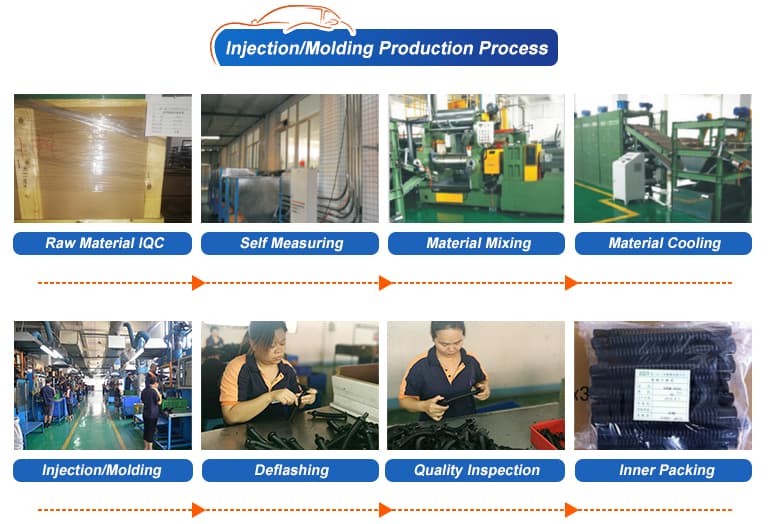
For customers developing automotive rubber sealing components, Fuste offers support throughout the manufacturing process, including:
Fuste supports customized production according to customer drawings, samples, dimensions, material specifications, and application requirements. This allows automotive OEMs, Tier 1 and Tier 2 suppliers, and component distributors to develop rubber sealing products for different vehicle platforms.
To explore available products and manufacturing capabilities, visit Fuste's molded rubber parts category or contact the technical team to discuss your project requirements.
An automotive rubber sealing solution is a rubber component or sealing structure designed to prevent water, dust, air, or other contaminants from entering vehicle components. Common examples include rubber grommets, bellows, gaskets, dust covers, and sealing profiles.
EPDM is commonly used for automotive waterproof seals because of its good resistance to water, ozone, and weathering. Silicone is another option for applications requiring a wider temperature range. The best material depends on the operating environment and chemical exposure.
A rubber grommet is generally installed around a hole or cable entry point to protect wiring and seal the opening. A rubber gasket is placed between two mating surfaces to prevent leakage or contaminant ingress at the connection interface.
Automotive rubber seals create a physical barrier through controlled contact and compression against surrounding surfaces. Proper geometry, material selection, and installation fit help prevent water and dust from passing through openings and joints.
Yes. Custom automotive rubber sealing components can be manufactured according to technical drawings, samples, dimensions, hardness, color, and material requirements. Custom mold development can accommodate different vehicle structures and installation conditions.
Manufacturers typically need a product drawing or physical sample, dimensions and tolerances, intended application, operating temperature, chemical exposure, required material, hardness, and expected performance criteria. Additional testing requirements should also be specified during development.
For customized automotive rubber sealing projects, contact Xiamen Fuste Rubber & Plastic Co., Ltd. to discuss your product drawings, material requirements, and manufacturing needs.




 online service


