You need to know the top automotive rubber components: rubber seals, gaskets, bushings, hoses, grommets, bellows gaiters, mats, and pedal pads. Each plays a critical role in automotive performance, safety, and comfort. They prevent fluid leaks, isolate vibration and noise, carry coolant and fuel, protect wiring from dust and water, and enhance interior durability and feel. These components must withstand extreme under-hood conditions. That ensures your vehicle's reliability. This article answers which components are most critical, their applications, key material properties like heat and oil resistance, common rubber materials such as EPDM and silicone, and the manufacturing processes used to produce them.
Automotive rubber components fall into distinct categories. Each category serves a specific job in your vehicle. Rubber seals and gaskets keep fluids and gases where they belong. Bushings and mounts absorb vibration and noise. Hoses carry coolant, fuel, and air throughout the engine bay. These parts work together to maintain vehicle performance and safety.
Rubber seals and rubber gaskets prevent leaks in engines, transmissions, and brake systems. You find them at every joint where fluids must stay contained. A failed seal leads to fluid loss, overheating, or brake failure. These automotive components must resist heat, oil, and pressure over thousands of miles.
Material selection matters here. Nitrile handles oil and fuel contact. Viton withstands extreme heat. Silicone stays flexible in cold temperatures. EPDM resists water and steam. Manufacturers produce these seals through compression molding and transfer molding. Both methods create wear-resistant parts with tight tolerances.
Rubber bushings and mounts isolate vibration in suspension and chassis systems. They sit between metal parts and absorb road shock before it reaches the cabin. Natural rubber offers excellent elasticity for these applications. SBR provides strong abrasion resistance for high-wear areas.
Hoses represent another critical category of automotive rubber. Coolant hoses, fuel lines, and brake hoses must resist heat, pressure, and chemical exposure. CSM rubber works well for hoses and valve seals because of its heat and oil resistance. These rubber components require careful material selection for each application.
Grommets, bellows gaiters, mats, and pedal pads will be covered in later sections. Each plays a unique role in protecting wiring, sealing doors, and improving interior comfort.
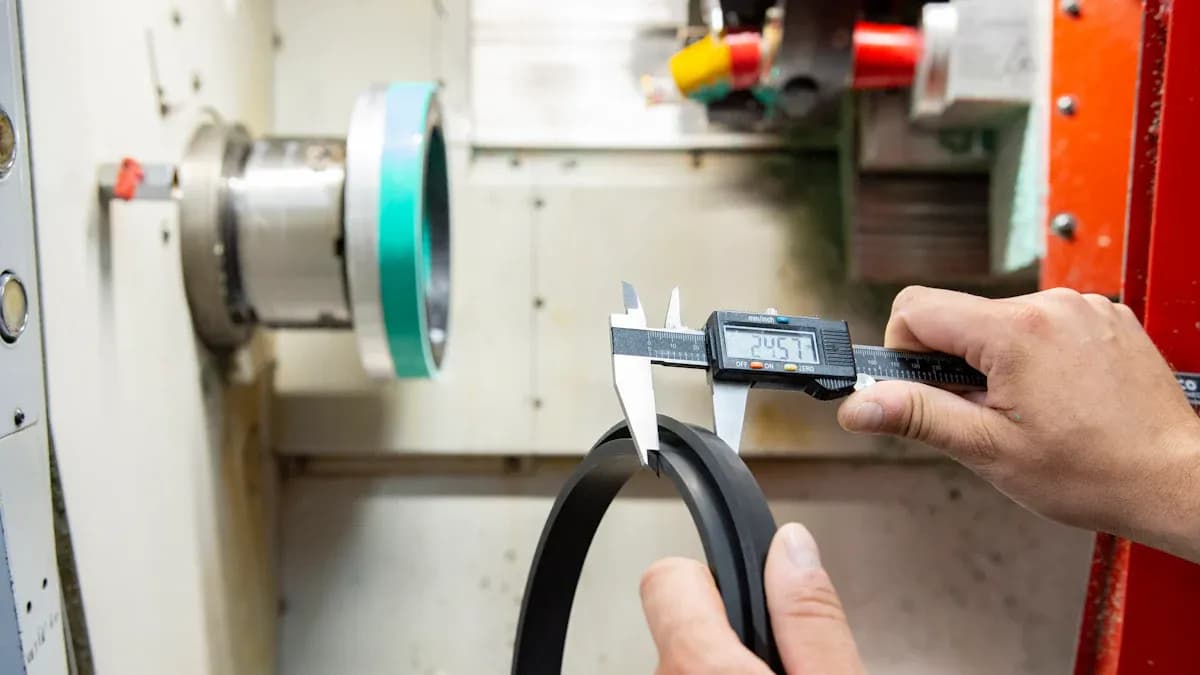
Rubber seals and rubber gaskets serve as the primary barriers against fluid leaks in your vehicle's most critical automotive systems. You find them in engines, transmissions, and brake systems. These automotive rubber components must maintain a tight seal under extreme temperatures, high pressure, and constant exposure to oils and chemicals. A failed seal can lead to overheating, loss of power, or brake failure. Understanding these rubber components helps you select the right parts for reliable performance.
Engine oil seal applications keep lubricants inside the crankcase. Valve cover gaskets prevent oil from escaping the top of the engine. Head gaskets seal the combustion chamber and keep coolant and oil separate. Transmission seal applications hold fluid under pressure. Brake seal applications maintain hydraulic pressure for safe stopping. Each seal faces different conditions. Engine seal applications handle high heat. Transmission seal applications deal with constant motion. Brake seal applications resist fluid damage.
Common failure modes include:
Compression set: permanent deformation from prolonged compression and high temperature, reducing elasticity.
Hardening and cracking: rubber becomes brittle from heat, ozone, or chemical exposure.
Extrusion and nibbling: seal material forces into gaps under high pressure, causing edge damage.
Abrasion: surface wear from relative motion and insufficient lubrication.
Chemical degradation: swelling or erosion from incompatible fluids.
Swelling and shrinkage: dimensional changes from fluid absorption or evaporation.
Thermal and pressure cracking: cracks from temperature fluctuations or rapid pressure changes.
Installation damage: tears or scratches from improper handling or sharp edges.
Choosing the right material prevents these failures.
Material selection directly affects seal performance. Nitrile (NBR) offers low compression set and strong oil resistance. Viton (FKM) handles a wide service temperature range. Silicone (VMQ) stays flexible in cold conditions. EPDM resists water, steam, and weather exposure.
Material
Compression Set Resistance
Temperature Range
Nitrile (NBR)
Reliable retention of seal geometry under sustained compression in standard environments; lower compression set (better shape retention) than Viton
Standard environments
Viton (FKM)
Good compression set performance across a wide service temperature range
Wide service temperature range
Nitrile provides superior compression set. You can squeeze it and it still maintains its shape and sealing ability. Its lower compression set allows tighter compression without losing sealability. Nitrile also offers better tear and abrasion resistance than Viton. This makes NBR ideal for engine use. Viton performs well in high-temperature automotive applications. Achieving optimal sealing performance requires matching material properties to operating conditions.
The manufacturing process also matters. Compression molding and transfer molding create wear-resistant seal components with tight tolerances. These processes ensure consistent density and shape. For custom requirements, manufacturers offer custom rubber seals with specific dimensions, hardness, and color. This flexibility helps you achieve reliable sealing for your specific vehicle system.
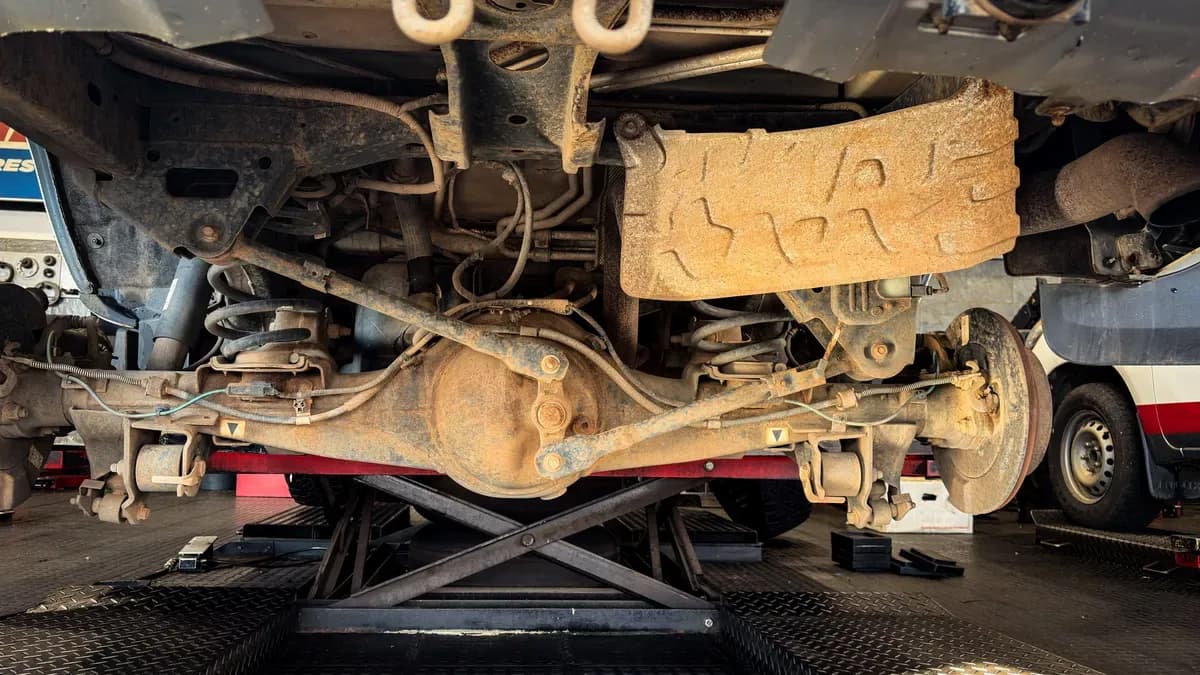
Rubber bushings and mounts sit at every connection point between your vehicle's suspension and its frame. They absorb the constant punishment of road surfaces. Without them, every bump would travel straight into the cabin. These rubber components serve one primary purpose: isolate vibration and noise before it reaches you.
Control arms, sway bars, strut mounts, and subframes all rely on rubber bushings. Each location demands a different stiffness and shape. A control arm bushing must allow suspension travel while resisting lateral forces. A sway bar bushing needs to twist freely under cornering loads. Engine mounts and transmission mounts follow the same principle. They hold heavy metal components in place while blocking vibration from reaching the chassis.
These automotive applications require careful tuning. A bushing that is too stiff transmits road noise. One that is too soft allows excessive movement and poor handling. Manufacturers balance these trade-offs through material choice and design geometry. For automotive rubber parts, the goal is always the same: keep the ride comfortable and the handling predictable.
Material selection drives bushing performance. Natural rubber offers superior tensile strength compared to SBR. This property comes from strain-induced crystallization, a natural strengthening mechanism. Natural rubber achieves its strength without heavy reinforcement.
| Property | Natural Rubber (NR) | SBR |
| Tensile Strength | 25–30 MPa | Slightly lower than NR |
| Reinforcement | Minimal needed | Requires carbon black |
SBR delivers strong abrasion resistance for high-wear areas. You find it in bushings that face constant friction and surface contact. Natural rubber excels in applications demanding elasticity and fatigue resistance. Both materials serve critical roles in vibration control. Choosing between them depends on the specific load, motion, and environmental conditions of each mounting point.
Hoses and tubing carry fluids and air through every major vehicle system. You find them under the hood, along the chassis, and near the wheels. Each hose must move the right medium at the right pressure without leaking or collapsing. This makes them one of the hardest-working categories of automotive rubber components.
Coolant hoses route hot liquid between the engine, radiator, and heater core. Fuel lines deliver gasoline or diesel to the injectors under constant pressure. Brake hoses transmit hydraulic force from the master cylinder to each wheel. Air intake ducts feed clean, measured air into the engine for combustion. Each application exposes the hose to a different fluid, temperature, and stress cycle.
Under-hood temperatures punish weak materials. Thermoset rubber hoses, the category that includes CSM rubber, are rated for continuous operation from -55°C up to +175°C. CSM rubber earns its place in hoses and valve seals because of this heat resistance and its strong oil compatibility. Fuel and brake lines demand different strengths. Nitrile resists fuel and oil swell, while EPDM handles coolant and steam without cracking. Neoprene adds weather resistance for exposed lines, and silicone holds flexibility in cold climates.
Material choice also affects seals and gaskets at every hose connection. A hose fails at the joint long before the tube itself wears out. Pairing the right rubber compound with the right fitting protects the whole assembly. For custom hose dimensions, hardness, and compound selection, work with a supplier who understands your specific automotive applications.
Grommets and bellows gaiters protect the wiring that runs through your vehicle's doors and body panels. Every time a door opens and closes, the wire harness inside bends and stretches. Without proper protection, that constant motion wears through insulation and causes electrical failures. These small rubber components solve a big problem.
Fuste's Custom Automotive Rubber Bellows Gaiter EPDM Door Boot Grommet shows how this works in practice. The corrugated bellows structure gives the gaiter exceptional flexibility. It bends and stretches with the door without cracking or losing shape. The integrated oval base grommet presses tightly into the vehicle panel. That tight fit blocks water, dust, grit, and road noise from entering the door cavity.
EPDM rubber grommets achieve an IP67 rating, which means they are waterproof and dust-resistant. This makes them suitable for exterior automotive applications and areas exposed to extreme vibration. Fuste offers custom dimensions, hardness, and color to match different car models. The company also produces molded rubber parts including grommets and air hoses.
Interior rubber parts improve comfort and durability. Floor mats trap dirt and moisture before they reach the carpet. Pedal pads give your feet reliable grip in wet conditions. Weatherstrips line doors, windows, and trunks to block rain, wind, and noise.
EPDM serves as the standard choice for weatherstripping and insulation. It resists sunlight, ozone, and temperature swings without cracking. Neoprene works well for low-smoke interior applications where fire safety matters. Both materials deliver the weather resistance you need for long service life.
These parts may look simple. Their role in sealing, insulation, and safety is not. Choosing the right rubber compound for each position keeps your vehicle quiet, dry, and reliable.
Every automotive rubber component must survive harsh conditions. Heat, oil, weather, and constant motion test these parts every day. You need to understand four key performance traits: heat resistance, oil compatibility, weather resistance, and flexibility. Each trait connects to specific materials and specific vehicle positions.
Heat resistance determines where a rubber part can serve. Engine compartments reach extreme temperatures. Silicone (VMQ) seals handle high-temperature zones near exhaust manifolds and turbochargers. Nitrile (NBR) gaskets resist oil at moderate temperatures. HNBR compounds push further into severe duty.
Valve cover gaskets, oil pan gaskets, timing cover seals, and crankshaft seals manufactured from HNBR compounds withstand continuous exposure to engine oils at 120-150°C and intermittent temperature spikes to 180°C during high-load operation.
Oil compatibility separates materials for fuel and lubricant contact. Nitrile swells in fuel but excels in oil. Neoprene handles both oil and weather exposure. You find neoprene in power steering lines and exterior seals. Weather resistance protects exterior parts from sunlight, ozone, and rain. EPDM dominates weatherstripping and window seals because it resists UV degradation without cracking.
Flexibility keeps rubber components working through millions of cycles. Rubber bushings in suspension systems must flex without tearing. Door bellows gaiters bend every time you open or close a door. Elongation at break measures this stretch capacity. According to rubberband.com, elongation at break refers to the maximum stretch a material can withstand before rupturing, expressed as a percentage of its original size. For EPDM rubber, the typical elongation at break value is 600%, which is relevant to high-quality automotive EPDM applications.
Durability ties directly to material selection. Natural rubber offers superior fatigue resistance for engine mounts and suspension bushings. SBR adds abrasion resistance for high-wear applications. Silicone maintains flexibility in cold climates where other rubbers harden. Each material serves specific automotive applications. Matching the right compound to each position extends service life and protects vehicle safety.
You need to understand six major rubber families to select the right automotive rubber components. Natural rubber, SBR, neoprene, nitrile, EPDM, silicone, CSM, and Viton each serve specific positions. Each material delivers a distinct balance of heat resistance, oil compatibility, and weather resistance. Matching the right compound extends service life and prevents premature failure. Understanding these materials helps you make informed procurement decisions for your automotive manufacturing needs.
Natural rubber offers superior elasticity and fatigue resistance. You find it in engine mounts and suspension bushings. Research confirms a Shore A hardness between 45 and 70 as the ideal range for these rubber components. The conventional sample tested at 58 Shore A. This hardness absorbs vibration without excessive movement. SBR adds abrasion resistance for high-wear suspension points. Both materials serve as critical rubber components in chassis systems.
Neoprene handles oil exposure and weather resistance equally well. You find it in power steering lines. Nitrile excels in fuel and oil contact. You see it in seals and fuel system hoses. These automotive components withstand constant fluid exposure. Manufacturers rely on nitrile for gaskets and transmission seals. These rubber components require precise compound selection.
EPDM dominates exterior sealing applications. It holds a significant market share in weatherstripping.
You pay $2-4 per kilogram for EPDM. This makes it a cost-effective choice for window seals and radiator hoses. The material resists sunlight and ozone without cracking. These rubber components deliver long service life.
Silicone handles higher temperatures up to 230°C. Industrial-grade silicone costs $5-15 per kilogram. You use silicone where heat resistance matters most. Specialty compounds like CSM serve in hose and valve seal applications. Viton handles extreme under-hood conditions. Each specialty rubber fills a gap that standard materials cannot cover. The manufacturing process for each material affects final performance.
You select a rubber compound, then you must shape it into a finished part. The manufacturing method determines wear resistance, flexibility, and fit. Three processes dominate automotive rubber production: compression molding, transfer molding, and extrusion. Each suits different part geometries and production volumes.
Compression molding places uncured rubber directly into a heated mold cavity. The press closes and applies pressure. Heat and pressure cure the material into its final shape. This method works well for large parts and low-to-medium volumes. Transfer molding improves on this by forcing rubber through a runner system into the cavity. The material enters under pressure, which reduces air entrapment and improves dimensional consistency.
Cycle time separates these two processes. Compression molding takes 3–8 minutes per cycle. Transfer molding takes 1–4 minutes. That 2–4 minute difference matters at scale. Faster cycles lower unit cost for high-volume automotive rubber components.
| Process | Typical Cycle Time |
| Compression Molding | 3–8 minutes |
| Transfer Molding | 1–4 minutes |
Extrusion pushes rubber through a die to create continuous profiles. You use extrusion for weatherstrips, hoses, and sealing strips. The process delivers consistent cross-sections at high speed. Process choice affects wear resistance directly. Molded parts achieve tighter tolerances and better surface finish. Extruded parts offer length and flexibility.
Many rubber components bond to metal inserts during manufacturing. Rubber-to-metal bonding creates bushings, mounts, and vibration isolators. The bond must survive the same heat, oil, and stress cycles as the rubber itself. Proper surface preparation and adhesive selection determine bond strength.
Fuste supports custom molded styles, dimensions, hardness, and color for automotive rubber parts. The company produces grommets, air hoses, and bellows gaiters to match specific vehicle requirements. Custom manufacturing lets you specify the exact compound, hardness, and geometry your application needs. Quality control at each stage ensures the finished rubber component meets performance standards.
You now understand the top automotive rubber components. Seals and gaskets stop leaks. Bushings and mounts control vibration. Hoses carry fluids. Grommets and gaiters protect wiring. Each part needs specific properties like heat, oil, and weather resistance. Materials such as EPDM, silicone, and nitrile deliver these traits. Molding and extrusion shape them into reliable parts. These rubber components keep your vehicle safe, efficient, and comfortable. For custom automotive rubber parts, contact Fuste. This vehicle rubber parts supplier offers custom dimensions, hardness, and color. Request a quote today.
Silicone and Viton handle extreme engine heat. Silicone stays flexible up to 230°C. Viton resists oil and fuel at high temperatures. Both serve critical sealing roles in hot zones.
Natural rubber offers superior elasticity for vibration control. SBR provides better abrasion resistance. Your choice depends on the specific load and motion requirements of each mounting point.
EPDM resists sunlight, ozone, and temperature swings without cracking. It delivers long service life at lower cost. This makes it ideal for window seals and door weatherstrips in any climate.
Transfer molding produces seals with better dimensional consistency. The process forces rubber into the cavity under pressure. This reduces air bubbles and creates wear-resistant seals with tighter tolerances.
Strong bonding prevents separation at the interface. Proper surface preparation and adhesive selection ensure mounts survive heat, oil, and constant stress. This extends service life for automotive vibration control parts.




 online service


