To select the right OEM partner, you must look beyond price. Focus on a custom rubber seal manufacturer that holds ISO 9001 and IATF 16949 certifications. Professional custom rubber seal manufacturing provides material expertise and engineering support. This combination determines seal reliability, lead times, and supply stability. In this guide, you will evaluate six criteria: certifications, customization, material expertise, vertical integration, engineering support, and partnership trust.
When you evaluate a custom rubber seal manufacturer, certifications create the first filter. They confirm whether a supplier follows recognized quality systems. Without proper certifications, you cannot trust batch consistency for your project. The right credentials act as third-party verification that processes meet established standards. They give you confidence before committing to a long-term partnership.
ISO 9001 provides the baseline for quality management across all industries. IATF 16949 builds on ISO 9001 by adding automotive-specific requirements. The key differences include:
Organizations that manufacture automotive parts—including rubber seal manufacturers—can pursue IATF 16949 certification if they meet the standard's requirements.
This distinction matters because major automakers treat IATF 16949 as mandatory. Without it, suppliers cannot submit quotes. IATF 16949 also improves efficiency through standardized processes. It reduces defective products and ensures consistency through batch tracking. These capabilities turn a basic supplier into a reliable partner.
Certifications provide evidence of a supplier's quality management system, but they do not tell the whole story. OEM buyers should also examine a manufacturer's track record, industry experience, and ability to handle similar sealing requirements.
Look for a supplier with established experience in your application area and a history of producing comparable rubber seals or gaskets. Review the industries they serve, the types of components they manufacture, and whether they have experience with similar materials, operating conditions, and production volumes.
A proven track record can also indicate how well a manufacturer manages quality consistency, tooling, design changes, and production challenges over time. Where possible, ask for relevant project examples, sample documentation, or customer references to verify their experience.
Rather than focusing solely on how many years a company has been in business, consider whether its experience is relevant to your application and supported by a consistent quality record. A supplier with experience across demanding automotive, industrial, or other specialized applications may be better equipped to address complex sealing requirements.
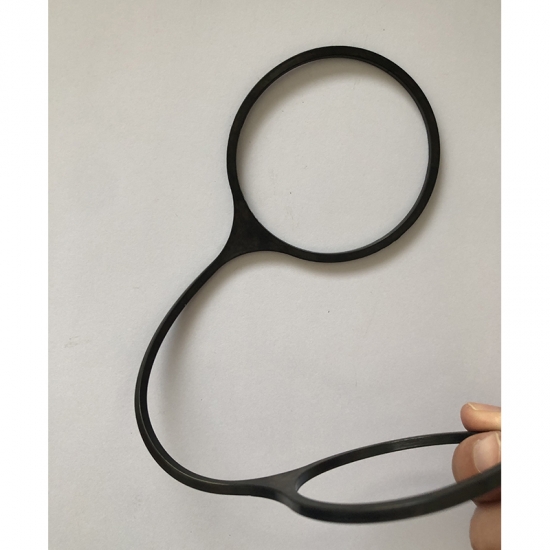
A capable custom rubber seal manufacturer turns your drawing or sample into a production-ready part. This process starts with prototyping and ends with full-scale output. Each stage demands different skills and controls.
You begin by sharing your requirements. Provide a profile drawing or sample photo, your working environment, and any known material preferences. Your supplier then reviews the design and may suggest improvements. This collaboration ensures the final part fits your application.
Tooling speed separates strong suppliers from weak ones. A certified mold partner can deliver a single-material prototype within 48 business hours after you sign off on the mold drawing. A dual-durometer co-extruded prototype takes about 72 hours. Non-certified partners often need 12 to 18 working days for the same task. That gap matters when your project timeline is tight.
In-house tooling provides a major advantage. One manufacturer performs 95 percent of its tooling internally. Typical O-ring tools with four to thirty cavities are cut in about eight hours. Higher-cavity production tools take two-and-a-half to three days. Outsourced tooling may take weeks. Internal custom tooling often finishes in a day or less. This approach shortens lead times and improves delivery.
Mold design accuracy depends on material shrinkage and printer resolution. FDM-printed molds may lack the resolution for flush parting lines. Small gaps cause flash and elastomer leakage. Higher-resolution methods like SLA produce finer geometries and better surface finishes. These molds also make demolding easier.
Your supplier should also offer custom gaskets and seals tailored to your drawings, samples, or ideas. This includes D-ring seals with flat-bottom cross-sections. The flat bottom prevents twisting and spiral failure during installation.
Moving from prototype to full production requires strict process control. Your supplier must maintain the same quality at 10,000 units as at 10 pieces. Statistical process control (SPC) tracks dimensional measurements over time. This allows early intervention before parts drift out of tolerance.
First Article Inspection and PPAP documentation confirm that dimensions, material properties, and process parameters meet specifications before mass production begins. Standard Operating Procedures document press temperatures, injection pressures, cure times, and mold release protocols. Inspection jigs like go/no-go gauges enable rapid shop-floor verification.
Material traceability matters for OEM applications. Lot tracking for raw material batches and finished goods prevents batch-to-batch variation. This documentation supports your OEM audits and ensures consistency.
Minimum order quantities vary by material and supplier.
Your supplier should offer OEM and ODM services to match your business model. Whether you need custom parts for automotive lighting or industrial machinery, scalability and consistency determine long-term success.
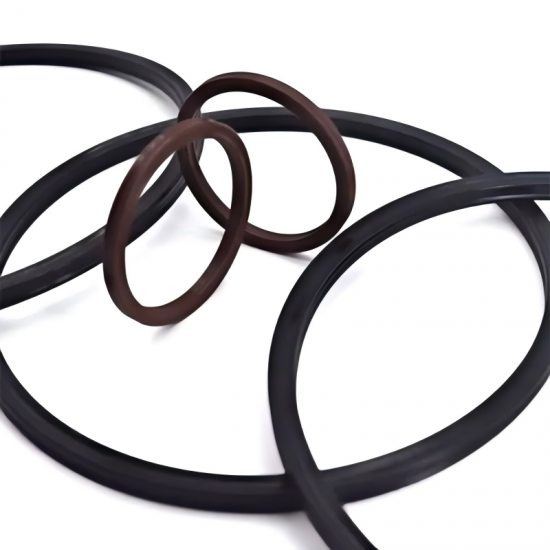
Material selection determines how well your seal performs in the field. You must match the elastomer to your operating environment. A wrong choice leads to premature failure, leaks, and costly downtime.
Each elastomer handles different chemicals and temperatures. Review this comparison before you specify a compound:
Material
Oil & Fuel
Acids & Bases
Ozone & UV
Max Temperature
Silicone
Moderate
Moderate (alkaline)
Excellent
High
NBR
Very Good
Poor
Good
—
FKM (Viton)
Superior
Excellent (mineral acids)
Excellent
High
EPDM
Poor
Excellent (dilute acids, bases)
Excellent
Moderate
FFKM
Excellent
Superior (concentrated acids)
Outstanding
Very High
FKM fuel-resistant grommets withstand a wide temperature range and resist fuel, solvents, and harsh chemicals. Hardness can be tuned across these materials. This range lets you tune stiffness for your custom rubber seals.
EPDM excels outdoors. It resists sunlight, rain, steam, ozone, and water contact. Choose EPDM for weather-exposed OEM applications like façade seals or solar panel mounting. FFKM costs more upfront. It survives oxygen and fluorine plasma in semiconductor processes. No other elastomer withstands direct plasma exposure. That capability justifies the premium when downtime carries a high cost.
Six common failure modes threaten rubber gaskets: compression set, chemical attack, thermal degradation, ozone cracking, abrasion, and extrusion. Each mode links to a material property you can control.
Compression set occurs when the seal loses elastic recovery. FFKM and FKM resist this better than NBR. Chemical attack breaks polymer chains. FFKM's fully fluorinated backbone provides near-universal chemical resistance. Thermal degradation softens or hardens the compound. Silicone and FFKM handle high temperatures well. Ozone cracking affects unsaturated rubbers. EPDM and silicone resist ozone inherently. Abrasion wears the sealing surface. Higher hardness improves durability. Extrusion pushes the seal into clearance gaps under pressure. Backed seals handle high pressures.
Match your material to the dominant failure risk. This approach extends seal life and protects your custom performance requirements.
A manufacturer that manages compound mixing, molding, and testing in-house has greater control over material consistency and production quality. It can also simplify communication and troubleshooting when adjustments are needed during development or mass production.
However, vertical integration alone does not guarantee quality. OEM buyers should check how each process is controlled, documented, and verified.
Testing capabilities are equally important. Depending on the application, relevant checks may include Shore A hardness, tensile strength, elongation, compression set, heat aging, and chemical resistance. Advanced analysis such as FTIR can help identify changes in compound composition and support batch-to-batch consistency.
For custom sealing projects, engineering support should also cover material selection, tooling, prototyping, drawing review, and design adjustments.
Engineering support separates a capable supplier from a basic one. Finite Element Analysis (FEA) simulates how your seal behaves under pressure, temperature, and other operating conditions. This helps engineers anticipate and prevent seal failure before it occurs. FEA models load transfer between contacting surfaces, accounts for friction effects, predicts localized yielding, and determines surface pressure distribution. These capabilities prove critical when you evaluate sealing surfaces and bolted joints.
Virtual simulation reduces reliance on physical testing and speeds up development cycles. You can optimize designs before building prototypes. This improves reliability, service life, and functionality. FEA also recreates conditions that caused premature seal failure. Engineers then gain actionable insights to design more durable seals.
Consider EV charging port sealing rings. These components must achieve appropriate protection grades. FEA helps validate the design before production begins. Your supplier should offer material consultation and performance validation alongside simulation. This complete engineering package supports both OEM applications and ODM projects. It also improves efficiency across your development timeline.
Production readiness separates a supplier who can sample well from one who can deliver at scale. You need proof that every batch meets your specifications. This section shows you what to inspect before you commit to volume.
Start with dimensional inspection. Rubber parts flex and shrink after molding, so standard calipers may distort measurements. Your supplier should use calibrated calipers for basic checks. Complex geometries require optical comparators and automated video inspection systems. These tools verify tight tolerances without deforming the flexible material. Mold validation comes next. Cavity geometry needs verification with high-precision coordinate measuring machines (CMM). A structured tooling maintenance program then monitors wear, prevents parting-line degradation, and keeps core pins aligned over time.
Material testing confirms the compound matches your specification. Ask for compression set testing, which measures how well a seal springs back after extended compression. Tensile strength and elongation tests check breaking points. Durometer verification confirms hardness meets your application needs. Environmental aging tests predict long-term performance using standardized methods. These tests reveal cracking, discoloration, and brittleness before your product reaches the field.
Process control keeps output stable. Your supplier should monitor mold cavity temperatures, manage vulcanization cycle duration, and automate press movements for shot-to-shot consistency. Machine parameters like injection speed, clamp pressure, and transfer position need continuous tracking. A capable custom rubber seal manufacturer documents all of this for your OEM audits.
Documentation proves your supplier controls production. Review these records during your evaluation:
Document Type
Primary Purpose
When Provided
PPAP Package
Validates the production process meets design requirements
Before mass production
Certificate of Conformance
Certifies each shipment meets purchase order terms
With every shipment
First Article Inspection
Confirms new tooling produces accurate parts
After tool building
Material Certification
Proves raw compound matches material standards
Per batch change
Control Plan
Outlines operational checkpoints during production
During initial setup
Material traceability tracks every component from the raw polymer bale to the final box. Unique batch numbers and lot codes enable precise root-cause analysis. This narrows potential recalls to a small fraction of production. Automotive OEMs expect high process capability on first-article dimensions. Low Cpk(Process Capability Index) signals the process is not capable.
Strong partnerships rest on clear communication. Ask your supplier one direct question: "What metrics or key performance indicators (KPIs) do you track to evaluate and score your own raw material compound suppliers?"
Their answer reveals how they manage their own supply chain. Confirm they request application data before quoting. Verify that material and performance specs are documented. Check whether they support customization for legacy or non-standard equipment. Review lead-time history and order accuracy. Ask about failure analysis and installation support. Compare lifecycle cost, not only unit price.
Supply reliability depends on capacity transparency. Your supplier should state typical lead times and monthly capacity. This lets you plan production without surprises. Look for process control indicators like high Cpk and low defect rates. Certified quality systems such as IATF 16949 and ISO 9001 provide the framework. Classification and tolerance standards supply further requirements. Inspection infrastructure like automated vision inspection reduces batch risk.
Product revisions need a formal change process. Any material or tooling change should trigger re-validation and updated PPAP documents. This protects your OEM applications from unannounced shifts. Assess vendor reliability, financial stability, and long-term product roadmap before you sign. A supplier who invests in high-quality manufacturing and strict quality control measures will support your program for years. That commitment delivers the efficiency and performance your production line demands.
You now have six criteria to guide your supplier search: certifications, customization, material expertise, vertical integration, engineering support, and partnership reliability. No single factor guarantees success. The strongest custom rubber seal manufacturer combines material knowledge, manufacturing capability, quality control, and technical support into one complete solution. Use these criteria as a checklist when you evaluate candidates. Compare their certifications, review their track record, and test their engineering depth. This approach protects your OEM applications and improves efficiency across your supply chain. When you find a supplier who meets these standards, request a quote or consultation. Share your drawings, operating conditions, and volume expectations to start the conversation. That step puts you on the path to reliable performance and long-term supply stability.
You need ISO 9001 as the baseline for quality management. For automotive programs, require IATF 16949 certification. Medical and food-contact applications demand compliance with relevant standards. These credentials verify that your supplier maintains documented processes and consistent batch control.
Request material certifications for each batch. Ask for compression set testing, tensile strength results, and durometer verification. Environmental aging tests predict long-term performance. A capable custom rubber seal manufacturer documents all test results for your OEM audits.
Certified mold partners can deliver single-material prototypes within 48 business hours after mold drawing approval. Dual-durometer prototypes take about 72 hours. In-house tooling for typical O-ring tools finishes in roughly eight hours. Outsourced tooling may take weeks. Internal custom tooling often completes in a day or less.
Review First Article Inspection reports and PPAP documentation. Check that your supplier maintains high process capability and low defect rates. Verify material traceability from raw polymer to finished goods. These steps confirm process capability before you commit to volume production.
Ask about monthly capacity and typical lead times. Confirm your supplier tracks raw material supplier performance. Review their change management process for product revisions. A formal change process triggers re-validation and updated PPAP documents. Financial stability and investment in quality systems support multi-year supply continuity.




 online service


