An automotive wire harness grommet is a molded rubber component that lines a panel opening and grips wires, cables, or hoses passing through it. These grommets play three critical roles in modern vehicle design. First, they protect wires and hoses from abrasion at sharp metal edges. Second, they seal openings against water, dust, and road noise. Third, they isolate vibration that could damage sensitive components. You will find rubber molded grommets in every vehicle, from passenger cars to heavy-duty trucks. Their applications extend across automotive applications, industrial equipment, and electronics. Engineers and procurement specialists rely on quality rubber grommets to ensure long-term reliability. This post provides practical guidance on design, material selection, and application requirements for automotive grommets.
An automotive wire harness grommet is a molded rubber component. It lines a panel opening and grips wires, cables, or hoses passing through it. You install wiring harness grommets wherever wiring or tubing must cross a metal surface. This creates a protective barrier between the sharp panel edge and the bundle. The grommet prevents direct metal-to-wire contact that would damage insulation over time.
You can find these parts in door panels, firewalls, and floor pans. Technicians sometimes call them eyelets. The core function remains the same: protect, seal, and isolate. Rubber molded grommets require careful material selection for each application. Rubber molded grommets must resist compression set and maintain flexibility for years. Rubber molded grommets form a critical protective system in every vehicle. Rubber molded grommets directly affect long-term reliability. Quality rubber molded grommets ensure consistent performance.
Automotive grommets serve three primary functions. First, the rubber protects wires from abrasion. Vehicle panels have sharp stamped edges. The rubber cushions this contact point. Without this protection, wire insulation wears through over time.
Second, these rubber grommets form a seal against environmental contaminants. Water, dust, grit, and road noise enter through any unsealed gap. A properly fitted grommet blocks these elements. You need resistance to moisture and dirt. You need resistance to temperature extremes for demanding conditions.
Third, these parts isolate vibration. Engine vibration and road shock travel through panels. These forces loosen connections over thousands of miles. The rubber absorbs these forces and dampens them effectively.
These three functions make automotive grommets essential for modern vehicle design. You must choose the right part for each application. Understanding environmental exposure levels helps ensure proper selection. For high-durability requirements in automotive applications, choose materials with resistance to heat and oil.
You must match the automotive wire harness grommet to the panel you are working with. Automotive sheet metal panels in body-in-white structures typically range from 0.8mm to 2.5mm in thickness. This range defines the groove width you need for a secure fit. The hole geometry also matters. Round holes work for standard cable pass-throughs. Oval or elongated openings accommodate wider bundles.
The retention features determine how well the grommet stays in place. Snap-fit lips or circumferential ribs create interference with the panel edge. This interference generates the pull-out resistance you need. Without proper retention, the grommet shifts under vibration or cable tension. Rubber molded grommets rely on material compression to hold position. The rubber must compress enough to grip but not so much that it deforms permanently. You also need to consider the panel edge finish. Sharp burrs can cut into the rubber over time. A small radius on the hole edge extends service life. These factors together define the mechanical performance of rubber molded grommets in any applications. Automotive grommets require careful attention to these details. Grommets prevent premature wiring failure. These grommets handle varying panel thicknesses well. The rubber formulation determines long-term performance. Grommets must also resist environmental exposure over the vehicle life.
The pass-through dimensions must accommodate the full bundle outer diameter. You need to leave room for movement without creating gaps. If the bundle shifts during vehicle operation, the seal can break. Strain relief prevents this problem. The rubber holds the bundle at a fixed point so tension does not transfer to internal connections. Corrugated bellows structures allow flexible bending in tight spaces. You see these in door jambs and firewall pass-throughs. The bellows flex with the door or harness movement. Integrated oval bases fit into tight panel openings where round holes do not work. This design saves space and simplifies assembly.
You must also consider the routing path. Sharp bends near rubber grommets increase friction and wear on the insulation. A straight approach through the grommet minimizes stress. For multi-cable bundles, you can use wiring harness grommets with multiple cavities. Each cavity guides one cable separately. This prevents chafing between cables inside the same bundle. Rubber molded grommets with internal dividers keep separation clean. The overall goal is to protect the wiring while maintaining sealing integrity. This grommet design guide covers the routing decisions you need to make. Understanding these principles helps you specify rubber grommets for your product design and application. Rubber molded grommets deliver reliable performance when designed correctly for the specific needs of each installation. Automotive grommets provide long-term reliability when matched to the right panel and routing conditions. Grommets serve a critical role in protecting vehicle electrical systems. Rubber molded grommets are precision components that require careful engineering.
You face constant threats from the environment in every vehicle. Water, dust, grit, and road noise attack wiring through any opening. Rubber grommets block these contaminants at the panel interface. The rubber creates a tight barrier that keeps moisture away from sensitive connections. This environmental sealing protects internal wiring from corrosion and short circuits. You extend service life significantly when you choose the right rubber molded grommets for each opening.
Heat and abrasion work together to degrade unprotected wiring. Engine compartments reach extreme temperatures that break down standard insulation. Road vibration causes wires to rub against metal edges. Quality rubber grommets absorb this vibration and cushion the wire bundle. The material must resist heat aging and maintain flexibility over time. These rubber molded grommets deliver the durability you need for long-term performance.
The firewall separates the engine compartment from the passenger cabin, helping prevent heat, noise, and fumes from entering the cabin. Grommets installed at firewall pass-throughs therefore face some of the most demanding conditions in a vehicle. They must withstand elevated under-hood temperatures, constant vibration, moisture, and exposure to oil, coolant, and other contaminants.
Firewall grommets may also need to accommodate specific routing angles and limited installation space. Right-angle designs, for example, can help route wiring harnesses while reducing bending stress and simplifying assembly. At the same time, the grommet must maintain a secure fit and effective environmental seal around the pass-through. Selecting a suitable rubber compound and grommet design is essential for protecting wiring throughout the vehicle's service life.
EPDM is widely used for automotive body and outdoor pass-through applications because of its strong resistance to weathering. It performs well against ozone, ultraviolet exposure, rain, and temperature fluctuations, making it suitable for door panels, floor pans, and exterior body openings.
EPDM rubber grommets can maintain flexibility and sealing performance under prolonged outdoor exposure. They are particularly suitable for general-purpose applications where resistance to weather, moisture, and aging is more important than resistance to petroleum-based fluids. For many body-panel and exterior applications, EPDM provides a practical balance of performance, durability, and cost.
Silicone rubber is commonly selected for grommets exposed to elevated temperatures, particularly in engine compartments and areas close to heat-generating components. Compared with many general-purpose rubber compounds, silicone maintains its flexibility and physical properties across a wider temperature range.
It also offers good resistance to thermal aging and repeated temperature cycling, helping maintain a reliable seal during changes between cold starts and high operating temperatures. Silicone can therefore be considered for high-temperature wire harness applications where EPDM may not provide sufficient thermal performance. However, material selection should also consider exposure to oils, fuels, and other chemicals, since temperature resistance alone does not determine suitability.
Oil, fuel, and chemical exposure can require elastomers with greater resistance than general-purpose compounds. NBR, HNBR, and FKM offer different levels of resistance to oils, fuels, heat, and chemicals, allowing the material to be matched to specific operating conditions.
NBR (nitrile butadiene rubber) provides good resistance to oils and fuels at moderate temperatures. It can be used for grommets installed in oil- or fuel-exposed areas where extreme temperature resistance is not required.
HNBR (hydrogenated nitrile butadiene rubber) provides improved heat resistance and mechanical durability compared with standard NBR. It can be considered for applications where both elevated temperatures and oil exposure place greater demands on the grommet.
FKM (fluoroelastomer) offers high resistance to heat, fuels, oils, and many aggressive chemicals. It is generally selected for demanding environments where conventional elastomers may not provide sufficient long-term resistance.
The final material choice should consider the actual operating temperature, type and level of chemical exposure, vibration, mechanical stress, and expected service life. Selecting the elastomer according to the application's worst-case conditions helps reduce the risk of premature degradation and sealing failure.
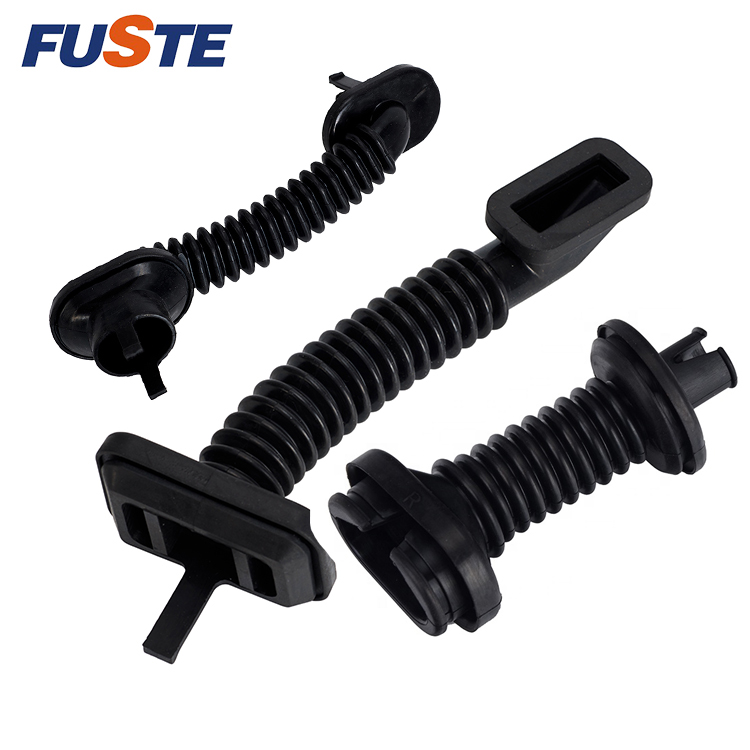
Panel grommets represent the most basic design. You push the rubber through a hole, and a flange on each side holds it in place. These rubber grommets work well for low-vibration openings where the cable stays fixed. Snap-in grommets add a locking lip that clicks into the panel. This design delivers higher pull-out resistance for demanding automotive grommets. You choose snap-in styles when the bundle moves or when assembly speed matters.
Split grommets feature a slit along one side. You install them around existing cables without disconnecting the harness. Maintenance and retrofit work benefit from this design. These types of rubber molded grommets save labor during field repairs. Each style serves a distinct purpose in the grommet design guide.
An automotive wire harness grommet often routes several cables through one opening. Multi-hole designs solve this problem with separate cavities for each cable. The internal dividers prevent chafing between wires inside the bundle. You maintain clean separation and reliable sealing at the same time. These wiring harness grommets simplify assembly for complex electrical systems.
Fuste offers several product variants for these applications. Door boot grommets flex with door movement. Firewall grommets handle heat and contaminant exposure. Wire harness sleeves protect long cable runs. Heavy-duty grommets serve new energy vehicles with high-voltage systems. These types of rubber molded grommets cover nearly every automotive application. You select the design that matches your routing needs and environmental conditions. Quality rubber molded grommets ensure your wiring survives the full vehicle life.
You protect every wire bundle that crosses a metal panel with an automotive wire harness grommet. These parts line the openings in body panels where cables pass from one zone to another. The rubber creates a sealed barrier that keeps water and dust out of the cabin and trunk. Without this protection, moisture reaches connectors and causes corrosion. You extend the life of the entire electrical system when you specify quality rubber molded grommets for these locations.
Firewall grommets handle the toughest job in any vehicle. They route cables from the engine bay into the passenger cabin. These grommets must resist heat, vibration, and chemical exposure simultaneously. Engine compartments generate vibration acceleration levels between 1 and 5g across a frequency range of 5 to 500 Hz. Your firewall grommets must absorb this constant shaking without losing their seal.
Door boot grommets flex every time the door opens and closes. These rubber grommets protect the wire bundle that feeds speakers, locks, and window controls. The corrugated bellows structure bends with the door movement without cracking. Body panel grommets seal openings in floor pans, wheel wells, and trunk floors. You stop road noise and water spray from entering through these gaps.
Engine compartment grommets face heat, oil, and constant vibration. Chassis grommets protect brake lines and fuel lines that run along the frame. Electrical system grommets isolate sensors and actuators from metal contact. Hose and tube pass-throughs use the same rubber molded grommets to prevent abrasion at panel edges. For electric vehicles, high-voltage wire harness grommets provide superior insulation against electrical hazards. These rubber molded grommets meet strict safety standards for new energy vehicles. Every application demands careful material selection and precise dimensions. These grommets deliver reliable performance across all automotive applications when you match them to the operating environment.
You must match the grommet material to the dominant exposure environment. Start with fluid contact. If fuel, oil, or hydraulic fluid may reach the component, eliminate EPDM immediately. EPDM has excellent ozone and UV resistance but no oil resistance. Nitrile works under 120°C with standard oil. Aromatic fuel above 120°C may require Viton. Consider temperature next. Under 120°C, EPDM, NBR, or neoprene are options. From over 120°C to 230°C with no aggressive chemicals, silicone may be selected. If external light or ozone is possible, avoid nitrile because it can crack. Choose neoprene or EPDM instead. When both external elements and oils are present, Viton is best.
The table below compares common compounds for underhood use.
Compound
Temp Range
Ozone Resistance
Compression Set (% @ 70°C/72h)
Best Use Case
Natural Rubber (NR)
–50°C to +70°C
Poor
25–35%
Indoor, low-vibration, non-oil environments only
Styrene-Butadiene (SBR)
–40°C to +90°C
Fair
20–30%
Budget automotive—avoid near exhaust manifolds
EPDM
–45°C to +150°C
Excellent
10–18%
Standard for modern vehicles—resists coolant, brake fluid, UV
Silicone
–60°C to +200°C
Excellent
8–12%
Racing, turbocharged, or high-underhood-temp applications
Reputable manufacturers list ASTM D2000 line callouts on spec sheets. If only "rubber" or "high-quality elastomer" is stated, assume SBR or generic NR unless proven otherwise. EPDM is identifiable by a matte black surface and slight chalkiness. Silicone feels smoother and more flexible at cold temperatures.
Common mistakes lead to premature failure. Using the wrong compound for the fluid causes rapid degradation. EPDM in oil and nitrile in UV both fail early. Ignoring the dominant exposure environment is another error. Material selection should follow the primary exposure rather than old habit. A material that performs well initially can fail once the environment changes. Overlooking temperature limits also causes problems. Underhood heat can exceed the rating of standard compounds. You must match materials to the actual temperature range.
Measure the full bundle outer diameter before you specify any grommet. The pass-through dimension must accommodate the bundle with room for movement. A gap allows moisture and noise to enter. A tight fit that compresses the bundle too much causes insulation damage. You need the right balance for reliable sealing.
Panel thickness determines the groove width. Automotive sheet metal typically ranges from 0.8mm to 2.5mm. Your grommet must grip this thickness securely. Retention features like snap-fit lips or circumferential ribs create pull-out resistance. Without proper retention, the grommet shifts under vibration. The rubber must compress enough to hold position without permanent deformation.
Use this checklist for your grommet RFQ. Confirm operating temperature range at the installation point. Identify all chemicals, oils, fuels, water, and weather exposure. Measure cable or hose diameter precisely. Record panel thickness and hole dimensions. Define sealing and retention requirements. Describe expected service conditions including vibration and movement. These details help suppliers recommend the right rubber molded grommets for your application. A complete grommet design guide helps you avoid costly errors. Proper selection of rubber molded grommets ensures long-term performance. Quality rubber molded grommets protect your wiring for years. The right grommet material and dimensions deliver reliable environmental protection across automotive applications.
You choose between two primary processes when you produce rubber molded grommets. Compression molding places uncured rubber into a heated cavity. The press closes and applies pressure while the material cures. This method suits low-to-medium production volumes and large part sizes. Tooling costs stay lower than injection molding. Lead times for new tools run shorter. You get flexibility for design changes during development.
Injection molding forces heated rubber into a closed mold under high pressure. This process delivers faster cycle times and tighter dimensional control. You achieve better repeatability across millions of parts. Tooling costs run higher and lead times extend further. The investment pays off for high-volume automotive programs. Your grommet cost per unit drops significantly at scale. Both processes produce quality grommets when you match the method to your production volume and tolerance requirements.
A complete grommet validation plan typically covers three testing categories. Dimensional testing verifies hole diameter, groove width, overall geometry, and other critical dimensions against engineering drawings. Material testing confirms key compound properties such as hardness, tensile strength, elongation, and resistance to heat aging. Functional testing evaluates how the finished grommet performs under actual or simulated service conditions.
Depending on the application, functional testing may include water and dust ingress testing, retention or pull-out force testing, thermal cycling, vibration testing, and compression or sealing performance evaluation. These tests help identify dimensional variation, material degradation, or structural weaknesses before parts reach vehicle assembly.
For automotive applications, quality management systems and industry-specific requirements provide an additional framework for controlling production consistency. Inspection procedures should cover incoming materials, molding parameters, dimensional accuracy, visual defects, and final product performance. Lot-based testing and traceability can also help identify quality issues and maintain consistent specifications across ongoing production.
A structured testing process reduces the risk of premature grommet failure, sealing problems, and wiring damage in service. The specific tests and acceptance criteria should be determined according to the grommet's material, design, installation environment, and OEM requirements.
Standard grommets rarely fit every opening in a vehicle. You often need custom dimensions to match specific panel thicknesses, hole geometries, and cable bundle sizes. A supplier with strong tooling capabilities can produce grommets in nearly any shape. You specify the inner diameter, outer flange size, groove width, and mounting structure. The manufacturer builds a mold to match your print.
Rubber compound selection follows the same custom path. You choose from EPDM, silicone, NBR, or FKM based on your operating environment. Custom hardness levels are available to meet your requirements. Custom colors help with assembly identification. The right rubber compound delivers the resistance your application demands against heat, chemicals, and weather.
Prototype-to-production support matters for custom programs. You need a supplier who builds samples for fit checks before committing to full tooling. This step catches design errors early and saves money. Once you approve the prototype, the manufacturer scales to production volumes.
You should evaluate several factors before you place a grommet RFQ with any supplier. Automotive rubber molding experience tops the list. A manufacturer who understands under-hood conditions and IATF 16949 requirements will deliver better parts. Material and tooling capabilities come next. Can they mold the compounds you need? Do they build their own tools?
Custom development support separates good suppliers from great ones. You want a partner who helps refine your design, not just fills an order. Quality control and testing must meet automotive standards. Production capacity and supply consistency protect your assembly line from shortages. OEM project experience shows the supplier has handled programs like yours before.
Fuste (Xiamen Fuste Rubber & Plastic Co., Ltd.) offers custom rubber molded grommets with full tooling and material support. The company holds certifications for quality management, environmental management, and automotive industry requirements. Fuste supplies rubber molded grommets for automotive, industrial, and electronic applications. You can request custom dimensions, compounds, and colors for your specific needs.
You must align grommet design, material choice, and application requirements to achieve protection, sealing, and long-term reliability. A mismatch in any one area leads to premature failure. Choose an experienced rubber grommet manufacturer with automotive molding and OEM project experience. This reduces risk in custom programs and protects your assembly line. Use the selection checklist and RFQ guidelines when you specify grommets for your next project. These tools help you communicate temperature, chemical exposure, and retention needs clearly. Your supplier can then recommend the right compound and dimensions. Proper grommets deliver the resistance your applications demand. Start your next specification with these practical steps.
EPDM handles most body panel and outdoor openings. It resists ozone, UV light, and weather without cracking. You get reliable sealing from harsh winter cold to summer heat. Choose EPDM for door panels, floor pans, and exterior body pass-throughs where oil and fuel contact do not occur.
Silicone outperforms EPDM in high-temperature zones. Engine compartments and exhaust-adjacent routing expose grommets to extreme heat. Silicone maintains flexibility and sealing integrity under these conditions. Specify silicone for under-hood wiring protection where thermal resistance matters more than cost.
Automotive sheet metal typically ranges from 0.8mm to 2.5mm. Measure your panel thickness and hole dimensions before you specify any grommet. The groove width must grip this thickness securely. Snap-fit lips or circumferential ribs create the pull-out resistance your installation needs.
High-voltage EV wire harness grommets require superior insulation and protection against electrical hazards. Look for a supplier with IATF 16949 certification and experience in new energy vehicle programs. Fuste offers heavy-duty grommets for these demanding applications. Custom dimensions, custom hardness, and material selection support your specific needs.




 online service


