In OEM rubber manufacturing, a drawing revision can affect much more than the dimensions of a finished component. A small design adjustment may change material requirements, mold geometry, production parameters, inspection criteria, and even the way a rubber part fits into the final assembly. Without a controlled engineering change management process, these updates can lead to tooling rework, inconsistent production batches, and costly quality issues.
For OEM buyers and engineering teams, effective engineering change management is essential to maintaining product consistency throughout the manufacturing lifecycle. From reviewing revised technical drawings to updating tooling and validating new samples, every change needs to be evaluated, documented, and approved before mass production continues.
This guide explains how engineering change management works for OEM rubber parts, what manufacturers should review when drawings are revised, and how proper validation helps ensure that updated components meet the required specifications.
Engineering Change Management (ECM) is a structured process for reviewing, approving, implementing, and verifying changes to a product's design or manufacturing requirements.
For custom rubber components, engineering changes may involve several areas:
Unlike a simple document update, an engineering change must be evaluated across the entire manufacturing process. A revised dimension, for example, may affect mold shrinkage compensation, cavity geometry, and the final fit of the rubber component.
For manufacturers producing custom molded rubber parts, maintaining a clear change management process helps connect engineering decisions with tooling, production, and quality requirements.
Not every engineering change originates from a product defect. Many revisions are part of normal product development, design optimization, or adjustments to actual operating conditions.
OEM customers may update product drawings after assembly testing, prototype evaluation, or feedback from downstream manufacturing teams. Common modifications include changes to wall thickness, hole diameter, sealing geometry, mounting dimensions, and dimensional tolerances.
For example, an automotive rubber grommet may require a revised outer diameter to improve its fit within a sheet-metal opening. Even a relatively small dimensional adjustment can influence mold cavity dimensions and the finished component's installation performance.
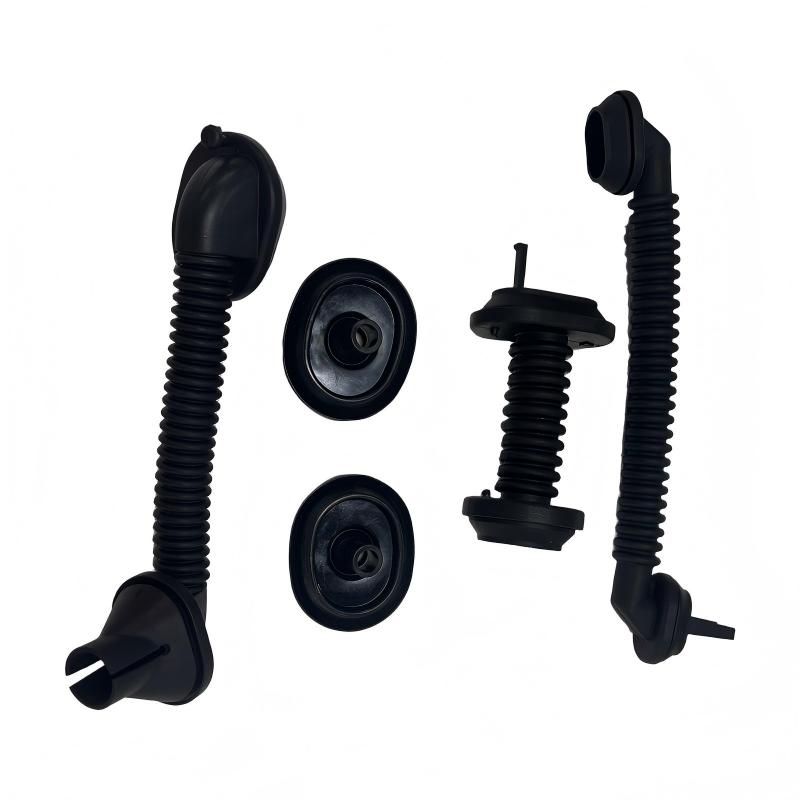
For products such as custom rubber grommets, drawing revisions should consider both dimensional accuracy and the component's practical installation requirements.
Material changes may be necessary when the original rubber compound does not fully meet the application's operating conditions. Customers may request a different hardness, improved oil resistance, better weathering performance, or a wider operating temperature range.
For instance, replacing an NBR compound with EPDM may be considered when improved resistance to outdoor weathering and ozone is required. However, the two materials have different chemical compatibility characteristics, so the substitution must be evaluated against the actual application.
A material revision can also influence shrinkage, curing behavior, elasticity, and dimensional stability. Therefore, changing the compound should never be treated as an isolated purchasing decision.
Engineering changes can also result from production feedback. Flash formation, difficult demolding, inconsistent dimensions, or excessive trimming may indicate that mold geometry or process conditions need improvement.
Depending on the issue, the manufacturer may need to modify the mold cavity, adjust the parting line, improve venting, or review the molding process. The objective is to improve manufacturability without compromising the approved product design.
Drawing control is one of the most important parts of engineering change management. When multiple drawing versions circulate between customers, engineers, and production teams, using an outdated specification can result in incorrect tooling or inconsistent finished products.
Before making any production changes, the engineering team should compare the revised drawing with the previously approved version.
Important details to review include:
Both the original and revised drawings should be retained for reference. The engineering team should also confirm which revision is currently approved for production.
After identifying the revisions, the manufacturer should assess how each modification affects the product and manufacturing process.
A useful engineering change review considers the following questions:
This evaluation helps determine whether the change can be implemented through process adjustments or requires physical tooling modifications.
Once the impact assessment is complete, the revised specifications should be reviewed and approved by the relevant parties before implementation.
A controlled document system should identify the current revision, approval status, implementation date, and affected production batches. Obsolete drawings should be clearly marked or removed from active production references to prevent accidental use.
For OEM projects involving multiple rubber components, this step is particularly important because different parts may have separate revision histories and approval requirements.
Not every drawing revision requires a new mold. Whether existing tooling can be reused depends on the type of design change, the mold structure, and the required dimensional accuracy.
For rubber molding, tooling changes should be evaluated carefully because elastomer shrinkage, material flow, curing behavior, and demolding conditions all influence the final component.
Some engineering changes can be addressed through relatively small mold modifications. Depending on the mold design, these may include adjustments to specific cavity dimensions, trimming areas, venting features, or replaceable inserts.
Minor modifications may be sufficient when the basic product geometry remains unchanged and the revised requirements can be achieved without redesigning the entire mold.
More substantial changes may require extensive tooling rework or a new mold. This is more likely when the revised design changes the overall geometry, introduces new functional features, or significantly alters the parting line and mold structure.
Before proceeding, the manufacturer should consider tooling feasibility, machining requirements, mold life, expected production volume, and the cost of modification compared with new tooling.

Manufacturing and tooling capabilities play an important role in managing these changes. Reviewing a supplier's rubber manufacturing equipment can help OEM buyers understand its production resources and manufacturing setup.
Once a drawing revision or tooling update has been implemented, the updated rubber component must be validated before it is released for regular production.
Validation confirms whether the revised part meets the latest approved design and performance requirements. The scope of testing should depend on the nature and risk of the change rather than applying the same inspection checklist to every revision.
New samples should be manufactured using the updated specifications and relevant production conditions. The first article inspection should compare the actual component against the approved drawing.
Typical inspection items include:
For molded components with complex geometries, measurement methods should be selected according to the feature being inspected. A caliper may be suitable for some basic dimensions, while more precise measuring equipment or dedicated fixtures may be needed for critical features.
Dimensional inspection alone may not be sufficient when an engineering change affects material composition or functional performance.
Depending on the application, additional validation may include:
Not all tests are necessary for every rubber part. The validation plan should be based on customer specifications, product function, material requirements, and applicable industry standards.
After inspection and testing, the results should be documented and compared with the approved acceptance criteria. If the samples meet the requirements, the customer can provide the necessary approval for production release.
If any characteristic fails to meet the specification, the manufacturer should investigate the cause, implement corrective actions, and repeat the relevant validation activities.
This step helps prevent unapproved design changes from entering regular production and ensures that both parties work from the same technical requirements.
A well-controlled engineering change process provides practical benefits throughout the OEM rubber manufacturing lifecycle.
For OEM buyers, these controls are also useful when comparing potential manufacturing partners. A capable supplier should be able to discuss how it handles drawing updates, tooling feasibility, sample inspection, and production approval.
Clear information from the customer makes engineering change reviews more efficient. When requesting a revised rubber component, buyers should ideally provide:
If the change affects tooling, the customer should also discuss whether the existing mold can be modified or whether new tooling is necessary. Agreeing on the sample approval process and production release conditions in advance helps avoid misunderstandings later.
At fuste, OEM rubber products can be developed according to customer drawings, samples, and application requirements. Its product range includes molded rubber components, grommets, hoses, and sealing products. For projects involving design revisions, customers can discuss material selection, product specifications, and manufacturing requirements with the team before moving forward.
Whether you are developing a new component or updating an existing design, clear engineering communication and appropriate product validation are important for achieving consistent OEM rubber parts.
Engineering change management is the process of reviewing, approving, implementing, and validating changes to rubber product designs, materials, tooling, or manufacturing specifications. It helps ensure that revised components meet approved technical and quality requirements.
No. Minor dimensional or tooling adjustments may be possible with the existing mold. However, major geometry changes, new functional features, or substantial modifications to the mold structure may require extensive rework or new tooling.
A revised drawing should identify the drawing number and revision level, updated dimensions and tolerances, material specifications, hardness requirements, geometry changes, and relevant inspection notes. Previous versions should also be retained for comparison.
Testing depends on the type of change. Common validation activities include dimensional inspection, hardness testing, material verification, compression set testing, and application-specific functional tests such as leak or chemical resistance testing.
Sample approval confirms that the revised rubber component meets the latest approved drawing, material, and performance requirements. It reduces the risk of producing large quantities of parts that do not meet customer expectations.
OEM buyers can reduce unnecessary costs by providing complete technical drawings, identifying critical requirements early, communicating design changes clearly, and reviewing tooling feasibility before approving modifications. Early sample validation also helps prevent expensive corrections during mass production.




 online service


