For automotive manufacturers, controlling production costs is not simply about finding cheaper components. Material waste, tooling expenses, assembly efficiency, component failures, and long-term maintenance all affect the total cost of vehicle production.
Custom rubber parts offer a practical way to address these challenges. Instead of adapting vehicle designs to standard rubber components, manufacturers can develop parts that match specific dimensions, operating conditions, and performance requirements. This can improve component fit, reduce unnecessary material use, simplify assembly, and help prevent premature failures.
As an experienced rubber manufacturer, FUSTE provides customized rubber components for automotive electrical systems, engines, chassis, cooling systems, and fuel systems. This article explores how automotive manufacturers can use custom rubber parts solutions to manage production costs while maintaining product quality and reliability.
Rubber components may represent only a small portion of a vehicle's overall manufacturing cost, but their performance can influence several important production and maintenance factors.
Automotive rubber parts are commonly used for sealing, vibration isolation, fluid transfer, wiring protection, and dust prevention. If a component does not fit properly or cannot withstand its operating environment, it may cause leakage, excessive vibration, wiring damage, or premature wear.
These problems can result in additional inspection, replacement, labor, warranty, and after-sales expenses. For automotive OEMs and Tier 1 suppliers, choosing the right rubber component is therefore an important part of controlling the total cost of ownership.
Working with a custom molded rubber parts manufacturer allows buyers to specify material properties, dimensions, hardness, and component structure according to actual vehicle requirements rather than relying entirely on standard products.
Standard rubber components do not always match the dimensions or installation conditions of a specific automotive application. Even small dimensional differences can create installation difficulties, additional adjustments, or inconsistent sealing performance.
Custom rubber parts are developed according to engineering drawings, samples, or application requirements. Manufacturers can specify dimensions, tolerances, hardness, and structural details to achieve a more suitable fit.
For example, custom automotive wiring grommets can be designed to match the size of body panel openings and the routing requirements of wiring harnesses. A properly designed grommet helps protect cables from sharp edges, moisture, and dust while making installation more straightforward.
FUSTE's EPDM automotive rubber bellows and door boot grommets are designed for vehicle door wiring protection, with customized dimensions, hardness, and colors available for different vehicle requirements.
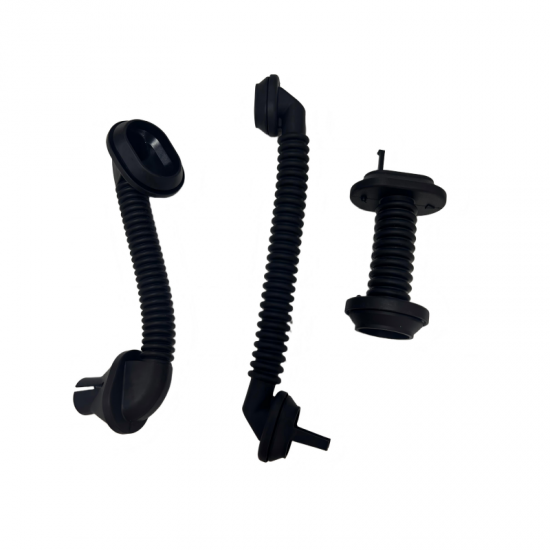
When components are designed around actual installation requirements, manufacturers can reduce unnecessary assembly adjustments and improve production consistency.
Choosing the right rubber material is another important factor in controlling automotive production costs. Different vehicle systems expose rubber components to different temperatures, fluids, chemicals, mechanical stresses, and environmental conditions.
Using an unsuitable compound may lead to cracking, swelling, hardening, deformation, or loss of sealing performance. These issues can increase replacement frequency and maintenance expenses.
Material selection should therefore be based on the actual working environment rather than price alone.
Common rubber materials used in automotive applications include:
The best material depends on operating temperature, media compatibility, pressure, compression requirements, and expected service life. For manufacturers purchasing multiple rubber components, matching each material to its application can help avoid unnecessary material costs without compromising performance.
Mold design directly influences the dimensional accuracy, material consumption, and production efficiency of molded rubber components.
An unsuitable mold structure may result in excessive flash, inconsistent dimensions, unnecessary material consumption, or repeated production adjustments. These problems can increase scrap rates and processing expenses.
With custom mold development, manufacturers can review component geometry, cavity design, parting lines, and production requirements before mass production begins.
For automotive rubber components with complex structures, early engineering communication is particularly important. Reviewing drawings and samples before tooling helps identify potential manufacturing difficulties and reduce costly mold modifications later.
FUSTE provides integrated rubber manufacturing support, covering material formulation, mold design and fabrication, sampling, and mass production. This helps customers coordinate different development stages with one manufacturing partner.
In automotive manufacturing, consistent component quality is essential for maintaining stable production lines. Variations in dimensions, hardness, or material performance can lead to assembly problems and additional inspection requirements.
Reliable production processes and quality management help manufacturers identify potential problems before defective components reach the assembly line.
For example, rubber vibration isolators must maintain suitable elasticity and structural integrity to absorb vibration and reduce noise. Inconsistent material properties or dimensions may affect their performance in engine and suspension systems.
FUSTE manufactures customized rubber vibration isolation components for automotive applications. Its automotive rubber shock absorbers and vibration isolators support different material options and customized dimensions to meet specific application requirements.
FUSTE also implements an IATF 16949 quality management system, supporting quality control throughout automotive rubber component manufacturing.
Custom rubber components are used across multiple vehicle systems. Their cost-saving value depends on how well the component matches the functional and operating requirements of each application.
Engine compartments expose rubber components to heat, vibration, pressure, and contact with different fluids. Coolant hoses, sealing gaskets, and flexible connectors must maintain their performance under these conditions.
Custom hose dimensions and material specifications can help improve installation compatibility and reduce the risk of leakage or premature replacement.
Depending on the application, manufacturers can explore custom extruded rubber hoses for automotive fluid transfer and engine system connections.
Modern vehicles contain extensive wiring networks connecting sensors, control units, lighting systems, and other electronic components. Rubber grommets, bellows, and protective sleeves help safeguard these cables where they pass through vehicle panels or moving structures.
Custom-designed wiring protection components can improve sealing, accommodate movement, and reduce cable abrasion. This is particularly important around vehicle doors, engine compartments, and body panel openings.
Properly selected rubber materials and suitable component geometry can also help reduce the risk of water and dust entering sensitive electrical areas.
Rubber gaskets, O-rings, and sealing components are essential for preventing fluid leakage in automotive systems. Their performance depends on material compatibility, compression characteristics, surface contact, and operating conditions.
A customized seal can be designed around the actual groove dimensions, pressure conditions, and fluid exposure of the application. This helps avoid problems associated with poor sealing fit or unsuitable rubber compounds.
For different automotive sealing requirements, manufacturers can review FUSTE's rubber gasket and sealing solutions, including customized rubber seals and gaskets.
Standard rubber components are often a convenient choice for common applications, especially when their dimensions and performance specifications already match the requirements.
However, when a standard component requires additional modifications or does not provide the necessary performance, a custom solution may offer better overall cost efficiency.
| Evaluation Factor | Standard Rubber Parts | Custom Rubber Parts |
|---|---|---|
| Initial Cost | Usually lower for readily available products | May include initial tooling and development costs |
| Dimensions | Limited to available specifications | Designed around application requirements |
| Material Selection | Limited material options | Can be tailored to working conditions |
| Assembly Compatibility | Depends on existing specifications | Can be optimized for specific designs |
| Production Volume | Suitable for flexible purchasing needs | Tooling costs can be distributed across production volumes |
| Long-Term Cost | Depends on fit and durability | Potentially lower when performance and production fit are optimized |
Custom rubber parts are not automatically cheaper than standard products. Their economic advantage becomes clearer when production volume, component complexity, installation requirements, and expected service life are considered together.
Choosing a suitable rubber parts supplier is just as important as selecting the right component design. Automotive buyers should evaluate both manufacturing capabilities and the supplier's ability to support long-term production requirements.
A qualified manufacturer should be able to review technical drawings, understand application conditions, recommend suitable rubber materials, and support tooling development.
It is also useful to confirm whether the supplier can manufacture components according to customer drawings or physical samples.
Automotive rubber parts may require dimensional inspection, hardness testing, tensile testing, compression set evaluation, aging resistance testing, or media compatibility verification, depending on their intended applications.
Buyers should confirm which inspection and validation procedures are available and whether the supplier can provide the required documentation for their projects.
For OEM and Tier 1/Tier 2 purchasing projects, stable production and consistent quality are important throughout the product lifecycle.
Manufacturers should evaluate the supplier's molding and extrusion capabilities, production planning, material sourcing, and ability to support repeat orders. A supplier that can coordinate development and manufacturing can also help simplify communication and project management.
FUSTE is a rubber manufacturer specializing in molded rubber components and extruded rubber hoses. Founded in 2004, Xiamen Fuste Rubber & Plastic Co., Ltd. provides customized rubber solutions for automotive electrical systems, engines, chassis, cooling systems, and other industrial applications.
Its manufacturing and engineering capabilities support different stages of automotive rubber component development:
Whether you are sourcing automotive rubber grommets, vibration isolators, sealing components, or custom rubber hoses, working with an experienced manufacturer can help you evaluate material choices, improve component design, and establish a more efficient supply process.
If your project involves a new rubber component or an existing part that needs cost optimization, contact the FUSTE team to discuss your drawings, samples, material requirements, and production needs.
Custom automotive rubber parts can reduce costs by improving component fit, optimizing material usage, simplifying assembly, and reducing premature component failures. They can also help manufacturers avoid unnecessary modifications when standard rubber parts do not match specific application requirements.
Common automotive rubber materials include EPDM, NBR, HNBR, FKM, and silicone. EPDM is often used for weather-resistant applications, NBR for oil resistance, FKM for demanding heat and chemical environments, HNBR for improved heat and mechanical resistance, and silicone for applications requiring flexibility and elevated-temperature performance.
Custom rubber parts may involve additional tooling and development costs. However, for suitable production volumes and applications, improved fit, reduced assembly adjustments, and longer component service life may offset the initial investment.
Buyers should ideally provide technical drawings or physical samples, material requirements, dimensions, hardness, operating temperature, contact media, application details, and estimated order quantities. These details help manufacturers evaluate the design and prepare an appropriate quotation.
Yes. Custom rubber manufacturers can develop components according to OEM drawings, samples, and technical specifications. The process generally involves design review, material selection, tooling development, sample production, validation, and mass production.
Automotive buyers commonly evaluate IATF 16949 quality management system certification, together with relevant material and product testing documentation. Additional requirements depend on the component's application, customer specifications, and target market.




 online service


