When sourcing rubber hoses for automotive or industrial applications, choosing the right material is only part of the process. Manufacturers must also meet specific industry standards, testing requirements, and OEM specifications to ensure that each hose performs reliably under actual operating conditions.
Standards such as SAE J20, SAE J30, ASTM D380, and ASTM D2000 are frequently referenced in rubber hose manufacturing. However, they serve different purposes. Some define hose application and performance requirements, while others establish testing methods or rubber material classifications.
For OEM buyers, understanding these differences helps prevent material mismatches, reduces quality risks, and makes communication with rubber hose suppliers more efficient. This guide explains the major rubber hose manufacturing standards and how they influence product development, testing, and quality control.
Rubber hoses operate in environments involving temperature changes, fluid exposure, vibration, pressure, and mechanical movement. A hose designed for an engine cooling system, for example, may require different material properties and construction methods from one used to transfer gasoline or diesel fuel.
Manufacturing standards provide a common technical reference for suppliers, engineers, and purchasing teams. They help define important product characteristics, including:
For automotive OEMs and component distributors, compliance should be evaluated against the specific application and purchasing specification rather than relying on a general claim that a hose meets international standards.
SAE International develops technical standards widely referenced in the automotive industry. For rubber hose manufacturers, SAE specifications help identify the intended application and relevant technical requirements.
SAE J20 covers reinforced and flexible hoses designed for engine coolant systems using water and ethylene glycol-based coolants.
These hoses are commonly installed between engine cooling components, radiators, and other coolant circulation connections. They must maintain their shape and sealing performance while exposed to elevated temperatures, coolant contact, vibration, and repeated operating cycles.
Important considerations when manufacturing SAE J20 coolant hoses include:
EPDM is commonly selected for automotive coolant hoses because of its weathering, ozone, and hot-water resistance. However, the final compound and hose construction must be verified against the applicable specification.
For automotive cooling applications, buyers can explore Fuste Rubber's extrusion rubber hose solutions, including EPDM-based hose products.
SAE J30 covers fuel, oil, and emission hoses used in mobile and stationary internal combustion engine applications. It includes hoses designed for gasoline, diesel fuel, lubricating oil, and related vapors.
Compared with coolant hoses, fuel hoses require particular attention to fluid compatibility, permeation, and resistance to fuel-related degradation.
Key manufacturing considerations include:
NBR and other suitable elastomers may be selected depending on the fuel composition, operating temperature, and application requirements. Material selection should always be based on the actual media and relevant test results.
For buyers sourcing customized automotive fuel and fluid transfer components, the customized extruded rubber hose range provides an example of Fuste Rubber's manufacturing capabilities for different hose applications.
ASTM International publishes technical standards covering material properties, testing procedures, and product specifications. In rubber hose manufacturing, ASTM references are useful for establishing consistent evaluation methods and material requirements.
ASTM D380 provides standardized test methods for inspecting and evaluating different types and constructions of rubber hoses.
Rather than defining one universal hose design, this standard provides testing procedures that can be referenced by application-specific hose specifications.
Depending on the applicable test method and product requirements, rubber hose inspection may involve:
Using standardized testing methods makes it easier for manufacturers and buyers to compare product quality and evaluate whether a hose meets the agreed technical requirements.
For this reason, OEM buyers should specify the relevant test methods, acceptance criteria, and test conditions in their purchase documentation.
ASTM D2000 is an important reference for classifying vulcanized rubber materials based on their physical properties and performance requirements.
It is particularly relevant during rubber compound selection and development. The specification uses a classification system to identify different material requirements, including hardness, tensile properties, heat resistance, and resistance to specific environments.
For rubber hose manufacturers, ASTM D2000 can help engineers communicate material requirements more precisely when selecting or developing rubber compounds.
Common elastomers used in hose manufacturing include:
It is important to understand that ASTM D2000 does not automatically certify a finished hose as compliant with SAE J20 or SAE J30. Material classification and finished hose performance are separate evaluation considerations.
Although SAE and ASTM standards are often mentioned together in rubber hose specifications, their roles are not identical.
| Standard | Main Focus | Typical Application |
|---|---|---|
| SAE J20 | Coolant hose requirements | Engine cooling systems |
| SAE J30 | Fuel and oil hose requirements | Fuel and lubrication systems |
| SAE J517 | Hydraulic hose requirements | Mobile and stationary hydraulic equipment |
| ASTM D380 | Rubber hose testing methods | Hose inspection and testing |
| ASTM D2000 | Rubber material classification | Compound selection and material specifications |
The main difference is that SAE standards such as J20 and J30 address specific hose applications, while ASTM D380 focuses on testing methods and ASTM D2000 addresses rubber material classification.
These standards can complement each other. A manufacturer may need to consider both the finished hose requirements and the material specifications when developing a product for an automotive OEM.
Meeting an industry standard is not always sufficient for automotive OEM production. Vehicle manufacturers and Tier 1 suppliers often establish additional requirements based on their own designs, operating conditions, and quality management systems.
OEM rubber hose manufacturing usually involves several stages of technical confirmation before mass production begins.
The first step is identifying the working environment of the hose. Engineers need to understand the conveyed medium, temperature range, pressure conditions, and expected service life.
Based on these details, the manufacturer selects a suitable elastomer and compound formulation. For example, an EPDM hose designed for coolant circulation requires a different material approach from an NBR-based hose intended for fuel or oil contact.
OEM drawings typically specify the hose's inside diameter, outside diameter, wall thickness, overall length, bend radius, and connection dimensions.
For reinforced hoses, the reinforcement material, layer arrangement, and bonding performance may also be important. These factors influence the hose's flexibility, pressure capability, and dimensional stability.
Fuste Rubber supports customized extruded hose development based on customer drawings and samples, with material options including EPDM, NBR, ECO, and CSM.
Before mass production, OEM buyers generally require prototype samples to be evaluated against the approved technical specification.
Depending on the application, the evaluation may include:
Not every test applies to every hose. The required test plan should be determined by the product specification and customer approval procedure.
Once the prototype is approved, production consistency becomes a major concern. Manufacturers need to control raw material batches, extrusion parameters, curing conditions, dimensions, and finished-product inspection.
For automotive supply chains, IATF 16949 quality management requirements are also important. Buyers should verify the supplier's actual certification scope and whether it covers the relevant manufacturing site and processes.
A reliable rubber hose manufacturing partner should be able to discuss material selection, production methods, testing arrangements, and technical documentation before an order is confirmed.
Different manufacturing processes influence hose structure, dimensional accuracy, and final performance. Extrusion is one of the common processes used to manufacture continuous rubber hoses in straight or customized profiles.
For example, Fuste Rubber manufactures extruded rubber hoses for automotive cooling, fuel, air, and other industrial applications.
The manufacturing process generally involves several important steps:
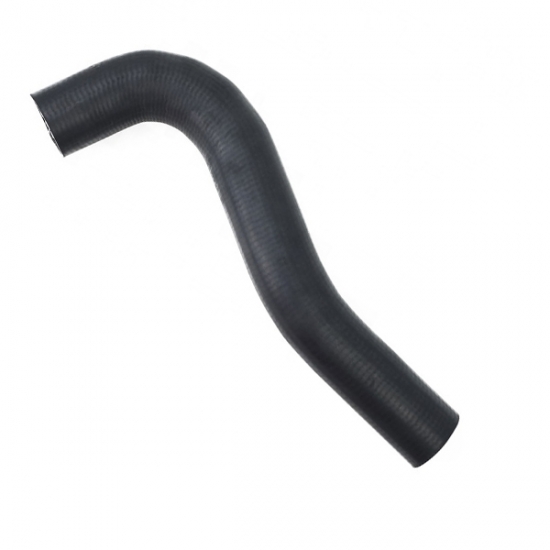
The exact production route depends on the hose construction, rubber material, and customer specification. For example, reinforced coolant hoses may require additional reinforcement and curing controls compared with simple low-pressure rubber tubing.
When evaluating a rubber hose supplier, purchasing teams should look beyond product prices and general quality claims. A manufacturer's technical capabilities and ability to meet project-specific requirements are equally important.
Before placing an order, consider the following questions:
When requesting a quotation, it is helpful to provide the following information:
Clear technical information helps manufacturers evaluate feasibility, recommend appropriate materials, and provide more accurate quotations.
Xiamen Fuste Rubber & Plastic Co., Ltd. specializes in molded rubber components and extruded rubber hoses for automotive and industrial applications. With experience in elastomer processing and customized production, the company supports different rubber hose requirements based on customer drawings, samples, and application specifications.
Fuste Rubber works with various rubber materials, including EPDM, NBR, silicone, HNBR, ACM, CSM, and FKM. Its product range includes fuel hoses, water hoses, radiator hoses, air hoses, and customized extruded rubber components.
The company's manufacturing capabilities include material selection, product development, extrusion processing, and quality control under its automotive quality management system.
For OEM buyers, distributors, and industrial component suppliers looking for customized rubber hose solutions, selecting a manufacturer that understands both material performance and application-specific standards is an important step toward reliable long-term supply.
Contact Fuste Rubber to discuss your rubber hose project, share your technical drawings, or request a customized manufacturing solution.
Commonly referenced standards include SAE J20 for coolant hoses, SAE J30 for fuel and oil hoses, ASTM D380 for rubber hose testing methods, and ASTM D2000 for rubber material classification. The applicable requirements depend on the hose's intended use.
SAE J20 covers reinforced and flexible hoses used in engine coolant systems, while SAE J30 covers fuel, oil, and emission hoses. They address different operating media and application requirements.
ASTM D380 provides standardized test methods for inspecting and evaluating rubber hoses. It helps manufacturers and buyers use consistent procedures when assessing hose quality and performance.
ASTM D2000 is primarily a classification system for vulcanized rubber materials. It defines material property requirements rather than a complete finished-hose specification.
There is no single best rubber material for every automotive hose. EPDM is widely used for coolant applications, NBR is commonly selected for oil and fuel resistance, and silicone is suitable for certain high-temperature air and coolant applications. The final selection depends on the operating environment and OEM requirements.
OEM buyers should provide application details, fluid type, temperature and pressure conditions, material requirements, hose dimensions, applicable standards, technical drawings, and expected order quantities. These details help manufacturers evaluate product feasibility and develop suitable hose solutions.
No. IATF 16949 is a quality management system standard for the automotive industry. It does not automatically certify every product against specific SAE or ASTM requirements. Individual hoses must still be evaluated against their applicable technical specifications and testing criteria.




 online service


